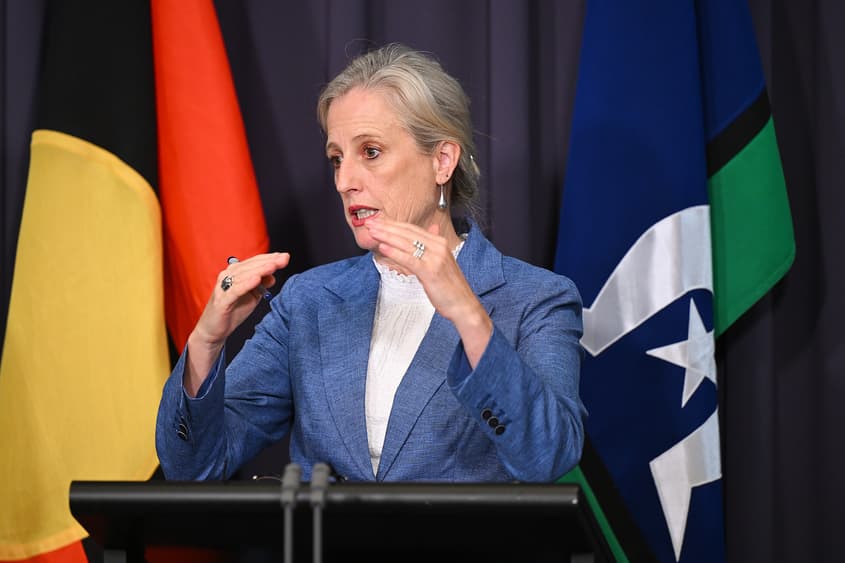
This week the Liberal Party shamefully misquoted the head of the Reserve Bank in a weak attempt to justify their criticism of government spending.
Sat 6 Dec 2025 06.00
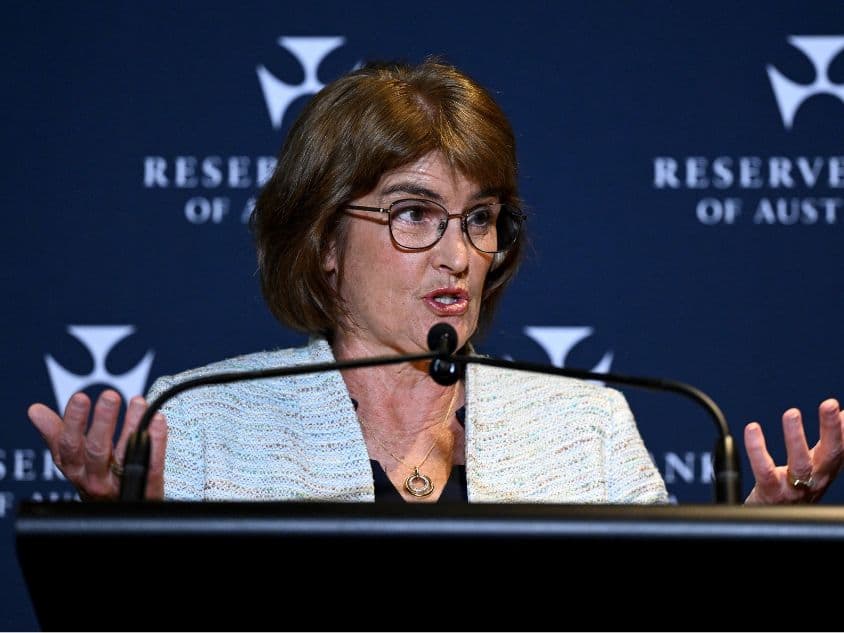
AAP Image/Dan Himbrechts


This week the Liberal Party shamefully misquoted the head of the Reserve Bank in a weak attempt to justify their criticism of government spending.
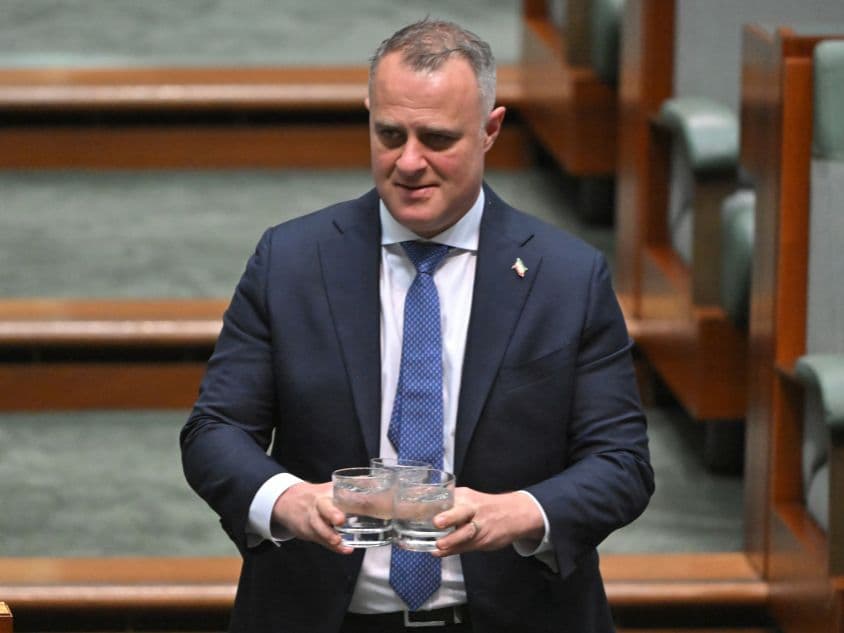
The demonisation of public spending has long been a strategy of conservative forces around the world – blaming it for any economic ill at hand. Currently the Liberal Party’s Treasury spokesperson, Ted O’Brien has gone back to the old canard that inflation and interest rates are higher because the government is spending too much.
O’Brien has likes to say that government spending is now higher than it has been since 1986 (outside of recessions).
This is kind of a dumb point. Because previously the NDIS was not a thing. Takeaway the extra spending due to the NDIS and government spending is not unusually high:
But the full weakness of the argument was highlighted this week when Ted O’Brien and Shadow Finance Minister James Paterson were reduced to massively verballing the Governor of the Reserve Bank in a desperate attempt to suggest they had a point.
In their media release put out after the RBA’s appearance before the Senate Economics committee, they wrote:
“Under questioning at Senate Estimates today, Governor Michele Bullock agreed that government spending has accounted for around half of all GDP growth in recent years. When asked whether that was “a significant proportion”, the Governor responded, “Yes.”
Alas for O’Brien and Paterson, the conversation was much more nuanced.
Governor Bullock’s actual response was:
“Yes, but I’ve made this point before, governments sometimes in circumstances where if you look back over GDP growth and the contribution of public over the last few years, in times when private demand is not doing very well often what happens is public demand comes in to fill the gap, and that’s certainly what we’ve observed over a number of periods in recent year”
Senator Paterson, who clearly did not get the answer he wanted, responded:
“Sure, but if Federal Government spending is roughly about a quarter and has been about a quarter for 20 years… if in the last few years Federal Government spending has accounted for half of all economic growth that’s a very significant…”
Bullock butted in here, replying:
“That’s contribution to GDP growth and that moves over time, and it depends very much on what is happening to the private contribution, and if the private sector is not contributing much, in a cyclical sense – say it is in recession – then you would expect the public sector to be accounting for more of the growth. That’s a cyclical phenomenon.”
Senator Paterson thinking he had a gotcha moment replied “Sure, but is it sustainable phenomenon?”
Governor Bullock at this point explained basic economics, noting:
“Well no, it’s a cyclical phenomenon… it’s not really a point of being sustainable. As the economy picks up and what would generally happen in a cyclical sense is that it [the public contribution] would decline.”
So rather more than just “yes”.
The reason this is important is because Ms Bullock is explaining exactly what we are now seeing.
During the mining boom, the private sector contributed more to economic growth than the public sector, but in the GFC that was reversed. Then Joe Hockey tried austerity even though the private sector was struggling.
It did not work.
During COVID, the public sector contributed everything while the private sector went backwards.
Over the past two years, the public sector contributed most of the growth because the private sector was weak. Now that the private sector is getting stronger, the public sector impact has shrunk – down to a level not seen for over a decade:
This is pretty basic economics.
O’Brien and Paterson however were not finished their verballing of the Governor.
In their media release they also wrote: “Bullock’s evidence was equally direct on inflation. Asked what happens when government spending increases, she said, “we expect inflation would be higher.”
Unfortunately for them, she was not “equally direct”.
Firstly, the question from Senator Paterson was not “what happens when government spending increases?”
His actual question was:
“All else being equal, if the economy is either in balance or above potential what’s the consequence for inflation and interest rates when there’s a positive shock to government spending”.
The question involves assumptions about the economy running at full capacity and then the government unexpectedly and significantly increasing spending (i.e. “a positive shock”)
Governor Bullock replied rather indirectly:
“Well again, in theory, what happens is that if you end up with total demand in the economy above what we’re forecasting there, that would suggest our forecast would depending on supply and our assumptions about supply we would expect that inflation would be a bit higher.”
Hardly, as, the media release suggests, “RBA confirms Labor’s spending is pushing interest rates higher”.
The opposition’s line also seems rather silly given just after Ms Bullock’s appearance before the committee the GDP figures were released showing that the contribution of non-defence spending by the federal government over the past year had fallen again, and was around levels observed during 2015-16 and lower than that of 2018 and 2019
Government spending has long been demonised, but you would hope the conservative forces in this country are not so lacking in evidence that they are reduced to verballing the head of Australia’s central bank. But for now, that seems to be the case.
Advertisement
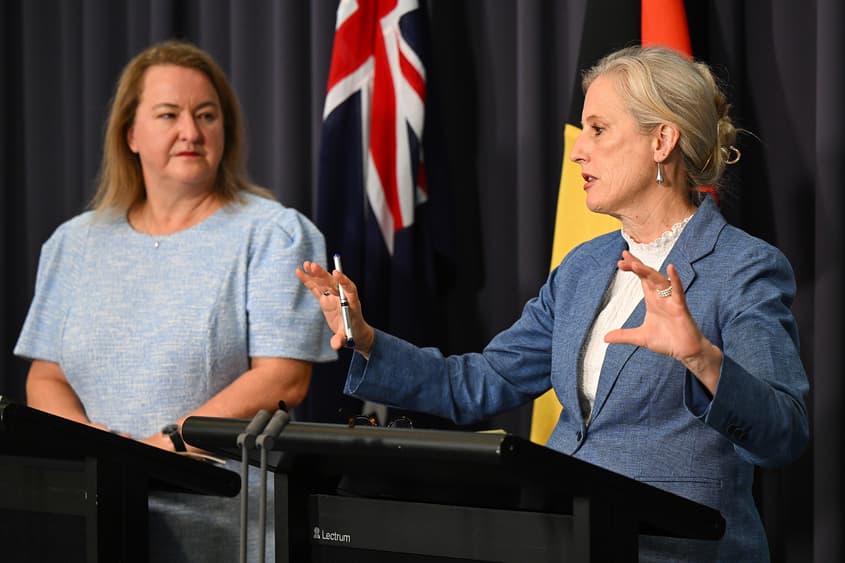
Earlier this week the Finance Minister and Minister for Women, Senator Katy Gallagher released the latest data of the gender pay gap by the Workplace Gender Equality Agency.
The health of the economy was revealed this week with the release of economic growth figures showing the economy grew at a better-than-expected rate of 2.6% for 2025. This compared to the forecast of just 2.2%.
The Workplace Gender Equality Agency (WGEA) has released their gender pay gap data today and while we took a tiny step closer to pay equity, men are still almost twice as likely to be in the highest earning quartile – earning more than $220,000.