Australia’s parliament could expand for first time in four decades
Australia’s parliament appears set to expand for the first time in four decades with election experts backing a reform they say is well overdue.
Mon 5 Jan 2026 06.00
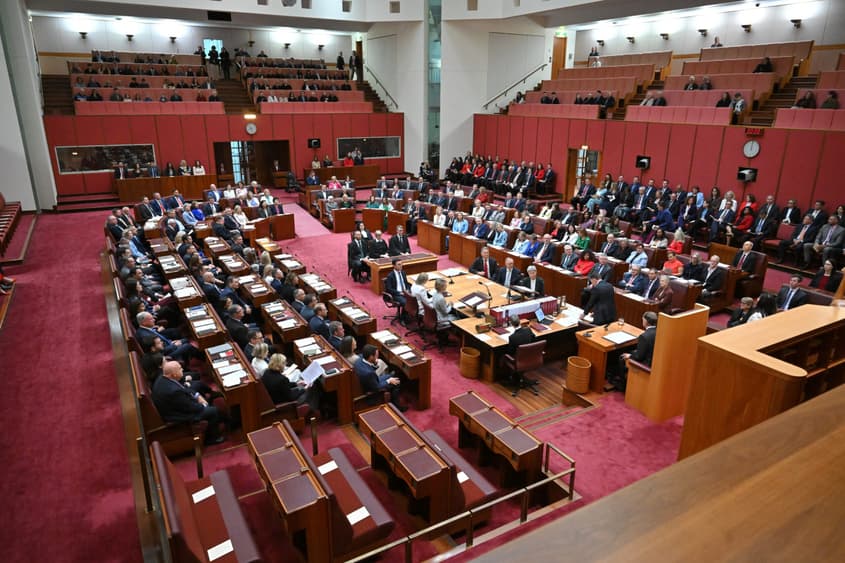
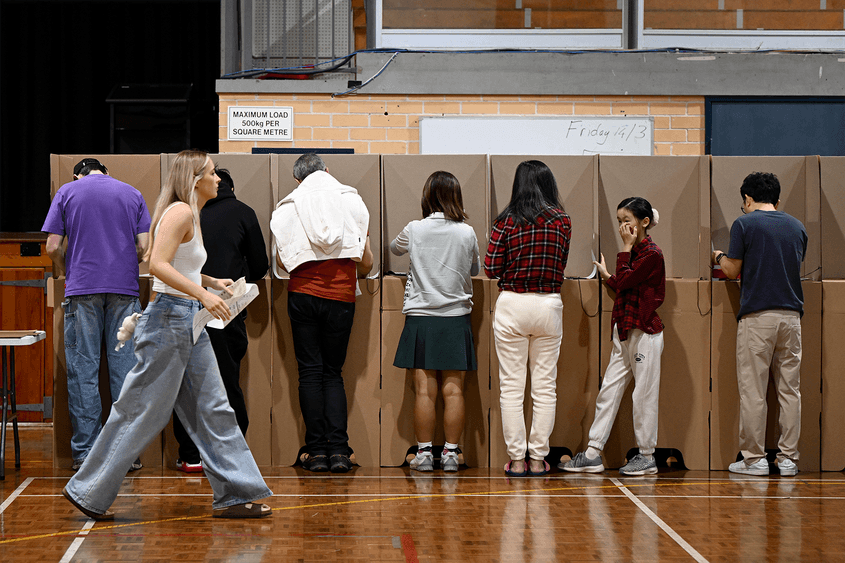
Photo: AAP Image/Mick Tsikas


Australia’s parliament appears set to expand for the first time in four decades with election experts backing a reform they say is well overdue.
The Albanese government is canvassing support for the addition of more senators and MPs, with Special Minister of State Don Farrell ordering the parliament’s joint committee on electoral matters to assess whether an expansion is necessary and justified.
“We’re well overdue for an increase,” said Bill Browne, the Australia Institute’s Director of the Democracy & Accountability Program.
“Politicians are feeling the squeeze having to divide their attention between 185,000 constituents and having to represent geographically large electorates.”
The first expansion of the parliament was implemented in 1949 when the House of Representatives went from 75 to 123 members to accommodate Australia’s growing population following World War II.
“You can only increase the House when you increase the Senate, and you can only really increase the Senate by lots of 12, because you add two senators per state,” explained Ben Raue, founder and author of electoral analysis website the Tally Room.
“So, you can’t just go, ‘Oh, we’re going to add two or three seats’. It does become this thing where it’s all or nothing, one big push that you do that has a big change that all happens at once, and then you don’t do it again for a while.”
The committee is also looking into fixed four-year terms so election dates are no longer at the discretion of the prime minister.
“We don’t have a particular number in mind. We’ve raised the issue for consideration, I think it’s a worthy issue to consider and we’ve sent it off to the body that always examines this,” Senator Farrell told Senate estimates in October.
“The Australian people might say we don’t want a bar of this, we’re happy with the existing numbers of MPs, and that could be the end of it.”
The second and most recent time the parliament was bolstered was in 1983-84 when the Hawke Government increased the number of MPs from 125 to 148 and the number of senators from 60 to 72.
At the time, Australia’s population was 16 million and each electorate, on average, contained 75,000 voters.
“The Hawke government had a long tenure after those changes, being one of the longest serving governments in Australian history, and it actually got those changes through thanks to the support of the National Party, which broke from the Liberal Party,” explained Mr. Browne.
While the Liberal party was opposed to the changes, National MPs backed it with gusto presumably because their geographically much larger rural electorates were getting difficult to cover.
The Australia Constitution states the number of members of the House of Representatives must be ‘as nearly as practicable, twice the number of the senators’. This means that, the number of MPs is going to be increased, laws must be passed to increase the number of senators for each of the states. The number of members in each state should also be proportional to the population of the state.
Raue said if the Senate was expanded to 16 senators per state, that would produce the following numbers in the House of Representatives:
NSW – 62 (+16)
VIC – 51 (+13)
QLD – 40 (+10)
WA – 22 (+6)
SA – 14 (+4)
TAS – 5 (-)
ACT – 4 (+1)
NT – 2 (-)
Australia’s population is set to hit 29 million ahead of the next federal election, which is due in 2028.
“It’s always difficult to convince the public of having more politicians, even though more politicians mean it’s easier to hold individual MPs to account, and easier for a community to displace a poorly serving MP,” said Mr Browne.
Mr Raue said an expansion would be in the voters’ best interest.
“The issues around capacity, around resourcing for MPs, have sometimes meant that they’ve added more staff,” he said.
“I would say it’s better from a democratic legitimacy perspective, if we’re going to add extra resources. They should be spread out amongst more MPs, rather than having a small number of MPs, who have increasingly large numbers of staff.”
By expanding the Senate to 200, MPs would go from having 185,000 people in their electorate, to 140,000.
In terms of voters per electorate, that would go from about 120,000 to about 90,000.
Mr Raue said if Labor was serious about implementing the expansion before the next election, it would need to move quickly.
“They will need to redraw the map in every mainland state,” he said, noting Tasmania would not qualify as its population is too small to justify a sixth seat.
Mr Raue sad the government would need to pass the legislation by mid next year so work can begin on redrawing the maps.
“It’s a big job. I reckon they probably need at least a year to do it, and you probably don’t want to wait until the right at the end of the parliamentary term, because once they make the decision, you can’t have an election on the old boundaries, you need to do it on the new ones.”
If the government held the 2028 election on the current boundaries and then shortly after began remapping them, it would mean Australians would have to return to the polls once the new boundaries were finalised.
Related Articles
Popular policies would be a better revenue raiser than taking fossil fuel and gambling donations
Australians are naturally suspicious of corporate donations, especially when they come from vested interests with everything to gain from influencing government decision-making. But are these donations large enough to explain why politicians act the way they do? The reality is that political donations from harmful industries are small relative to the payments parties receive from you, the voter.