Lifting ban on political donations by developers could increase corruption risk: QLD corruption watchdog
As Queensland prepares to host the 2032 Olympic Games, the state’s Crime and Corruption Commission (CCC) has warned the Crisafulli government against lifting the ban on political donations by property developers.
Sun 11 Jan 2026 06.00
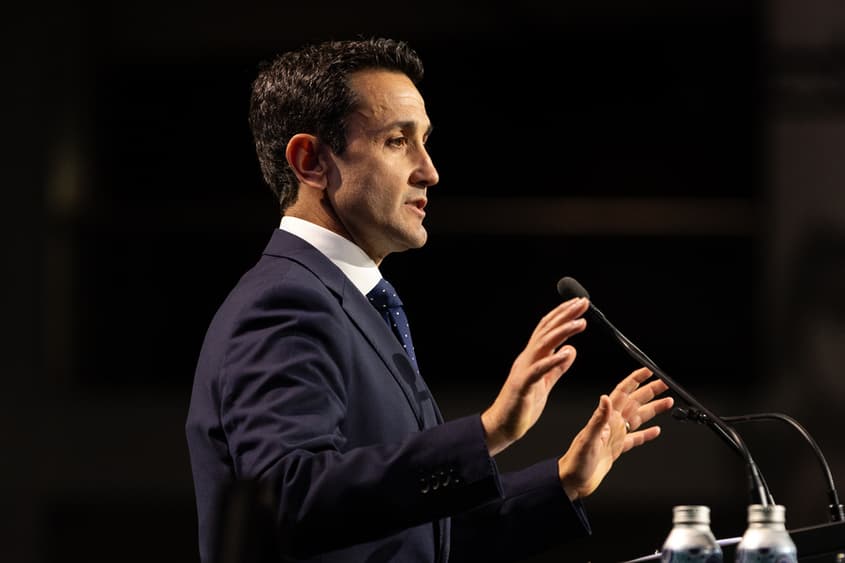
Image: AAP/Russell Freeman


As Queensland prepares to host the 2032 Olympic Games, the state’s Crime and Corruption Commission (CCC) has warned the Crisafulli government against lifting the ban on political donations by property developers.
Attorney-General and Minister for Justice and Minister for Integrity Deb Frecklington chose the final sitting of Queensland parliament last year to introduce the Electoral Laws (Restoring Electoral Fairness) Amendment Bill 2025.It would lift the ban on property developers making political donations and further restrict the rights of prisoners to vote in state elections.
“Trade unions and property developers will once again have a level playing field for donations, restoring fairness for all involved in our electoral system, just as we promised,” Ms Frecklington said.
In the CCC’s submission to the committee assessing the proposed legislation, Chairperson Bruce Barbour said the changes “are a significant departure from Queensland’s robust political donations framework and are out-of-step with reforms introduced to manage risks associated with political influence, and perceptions of it”.
The Palaszczuk Labor government introduced the ban in 2018 following a CCC recommendation to prohibit developers from donating to council elections and candidates, after the CCC found that developer donations caused recurring issues in the state.
The legislation went further, and included a ban on donations at a state-level – a move the LNP said was an “electoral financial gerrymander”.
The CCC is concerned about the timing of the proposed changes, noting that Queensland is entering a “significant period” in the lead up to the 2032 Brisbane Olympic Games.
“Queensland is entering a period of increased investment in property and infrastructure development driven by population growth, economic diversification, with major sporting and other events,” wrote Mr Barbour.
“There is concern that the reintroduction of property developer donations could exacerbate real and/or perceived risks of undue or improper influence, particularly as developer interests align closely with major projects.”
In its submission, The Australia Institute also raised concerns about timing. Director of the Australia Institute’s Democracy and Accountability Program, Bill Browne pointed out that holding the inquiry over the Christmas holiday break would “limit the ability of the committee to investigate the consequences of the bill for Queensland democracy”.
“Lifting the ban would risk ‘clientelism’ where decision-makers put the interests of their patrons above the public interest,” said Mr Browne.
The proposed changes would also allow political donors to give four times as much as is permitted under today’s rules.
Currently, a single donor can give up to the following amounts over a four-year term:
- $4,800 to a registered political party plus $7,200 collectively to candidates endorsed by the same registered political party
- $7,200 to an independent candidate
Under the new legislation, the donation cap would reset each year, so that in total $48,000 could be given to a single party over four years.
“Shifting from a per-cycle donation cap to a per-year donation cap benefits the major parties at the expense of new entrants,” said Mr Browne.
“Only established parties and sitting MPs are likely to fundraise over all four years of an electoral cycle, so they can in effect raise much more money than a new party or independent candidate can.”
Mr Browne said another “unfair element” is that a donor can give $12,000 to a political party and its candidates but only $7,200 to an independent nominee.
“These should be equalised, either by lowering the party cap, raising the independent cap, or by replacing the donation cap altogether with something more effective like a mega-donor cap.”
If property developer donations are to be allowed, the CCC has recommended steps that would enhance transparency, proposing that “all donations from property developers be disclosed via the Electoral Commission of Queensland’s Electronic Disclosure System, regardless of the value of the donation”.
It also stated the need for “the origin from a property developer be clearly identifiable and traceable.”
The legislation overhaul also includes banning prisoners from voting.
“Law breakers shouldn’t get to elect our law makers,” said Queensland Attorney-General and Minister for Justice and Minister for Integrity Deb Frecklington.
“We’re determined to prioritise victims and those who disregard the law by committing serious crimes should not have the opportunity to vote.”
Under the changes, criminals serving a prison sentence of one year or longer will be banned from voting at state and local government elections.
“Prisoners are more exposed to the operation of the state government than almost anyone else in Queensland,” said Mr Browne.
“In addition, those with less than four years left on their sentences will be re-joining the community during the term of the parliament. They should not have their voting rights further restricted.”
Currently, prisoners are ineligible to vote at state or local government elections if serving a sentence of three years or more.
Related Articles
Popular policies would be a better revenue raiser than taking fossil fuel and gambling donations
Australians are naturally suspicious of corporate donations, especially when they come from vested interests with everything to gain from influencing government decision-making. But are these donations large enough to explain why politicians act the way they do? The reality is that political donations from harmful industries are small relative to the payments parties receive from you, the voter.