New modelling suggests non-government parties would see greatest increase in seat share from expanded parliament
Labor is canvassing support for the addition of more senators and MPs to better reflect the country’s growing population.
Sun 11 Jan 2026 06.00
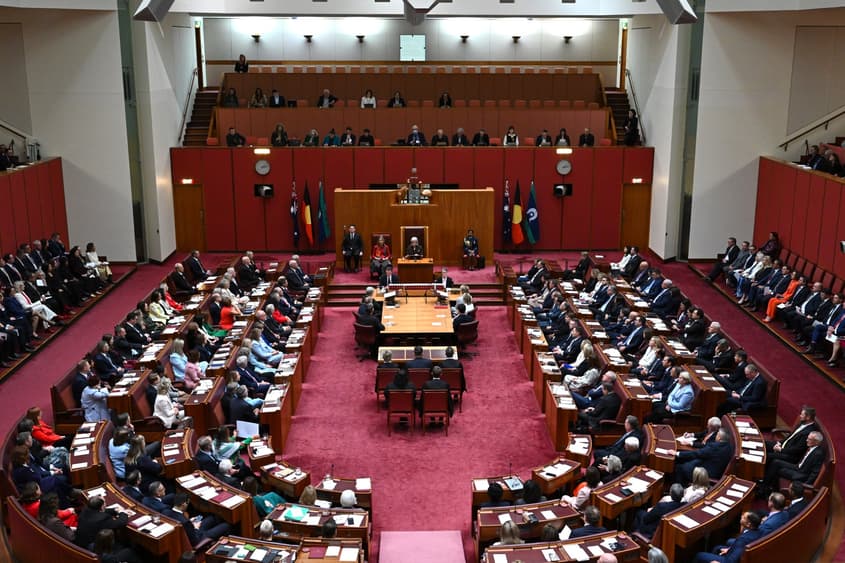
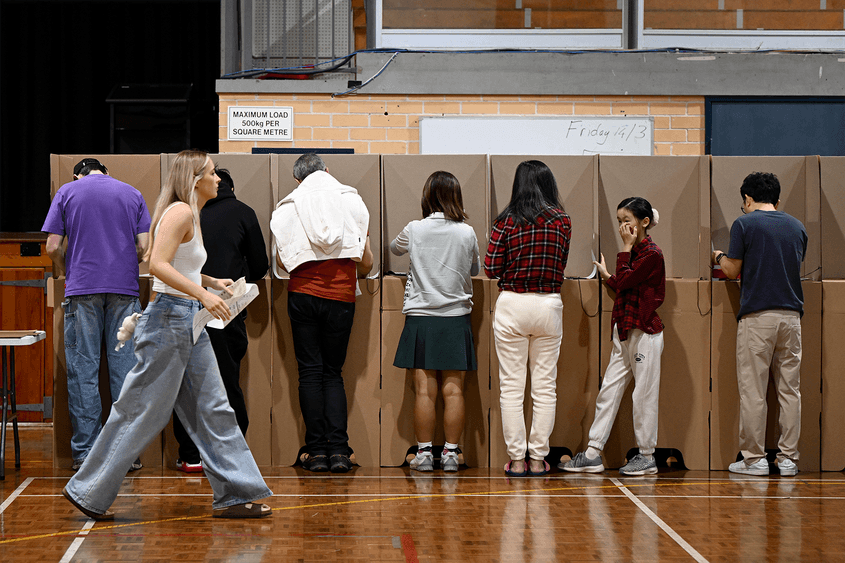
Photo: AAP Image/Lukas Coch


New modelling suggests non-government parties would see the greatest increase in seat share from an expanded parliament, disproving claims that the Albanese government’s push for more elected representatives is motivated by political self-interest.
Labor is canvassing support for the addition of more senators and MPs to better reflect the country’s growing population.
The parliament was last bolstered in 1983/84 when the Hawke Government increased the number of MPs from 125 to 148 and the number of senators from 60 to 76.
“The latest modelling suggests that, if anything, the Coalition would gain relatively more from an increase than would the Labor Party,” pointed out Bill Browne, the Australia Institute’s Director of the Democracy & Accountability Program.
“So, there’s no evidence to suggest that Labor is doing this for partisan benefit, but rather to improve the quality of governance in general in Australia.”
Liberal politicians have criticised the proposed increase.
However, Mr Browne said there’s a good chance the Nationals won’t sing from the same song sheet.
“The Nationals have been quieter, and you can see why,” said Mr Browne.
“With Australia’s population urbanising, rural electorates must grow geographically larger to cover the same number of people.
“We know that places a toll on MPs in terms of the travel requirements to cross the electorate and trying to represent people who are geographically separate from others who happen to be in the same electorate.
“I wouldn’t be surprised if the Nationals came on board.”
Electoral analyst Ren Raue said the Nationals should again consider splitting from the Liberals – as they did for the 1983 vote.
“Anyone who pays attention to the redistribution process will be aware of the regular controversy over the size of rural electorates,” he said.
“Nationals MPs and other figures in rural communities will often decry the large land mass rural MPs are required to cover.”
Mr Raue said an expansion “would probably make it a little bit easier for independents and minor parties to win seats in the Senate”.
Senate candidates don’t need 50% of the vote to win a seat. Instead, they must reach a quota – the minimum share of votes required to be elected.
“Adding extra senators would lower the threshold to get elected,” said Mr Raue.
“So, if you elected eight senators at each election per state, the quota would be 11%, whereas now it’s 14% so that would make it easy to get elected.”
With One Nation currently gaining ground, the founder and author of the Tally Room said an expanded parliament won’t “change the dynamics of an election, it just increases the volume”.
“They are doing very well in the polls right now,” said Mr Raue.
“Even with the current parliament, if they were polling what they’re polling now (at the next election), they probably would win a bunch of seats in the House.”
“If they’re winning eight in an existing parliament, maybe they win 10, maybe they win 12.
He pointed out that while Labor’s vote is “holding up”, the Coalition vote is being cannibalised by One Nation (since the election, the Coalition is polling about 5% lower and One Nation about 11% higher).
“When you get to that level and some of the more conservative Coalition seats, One Nation starts to knock the Coalition out of the race, and Coalition preferences decide who wins.
“So, it’s kind of a mirror image of what we saw with the Greens in the inner cities, where Labor drops into third place and their preferences elected the Greens.”
Mr Browne said while an expanded parliament would mean more “decision makers,” each politician “will hold a bit less power”.
“Having smaller electorates makes it easier for candidates who are connected to the local community.
“It frees up each MP to spend more time in their electorate, hearing from their constituents, and it would give them more time to specialise in committee work and in legislative scrutiny,” he said.
“The work would be shared around more people, so we’d get a better-quality parliament as a whole, even if the chance of being an individual kingmaker is reduced.”
He said it’s “absolutely possible” for the Albanese government to expand the parliament by the next election in 2028.
Related Articles
Popular policies would be a better revenue raiser than taking fossil fuel and gambling donations
Australians are naturally suspicious of corporate donations, especially when they come from vested interests with everything to gain from influencing government decision-making. But are these donations large enough to explain why politicians act the way they do? The reality is that political donations from harmful industries are small relative to the payments parties receive from you, the voter.