Queensland’s LNP government has been accused of exploiting the summer holiday lull to avoid scrutiny of a contentious bill, which would lift the state’s ban on developer donations to political parties and candidates.
Fri 16 Jan 2026 13.00
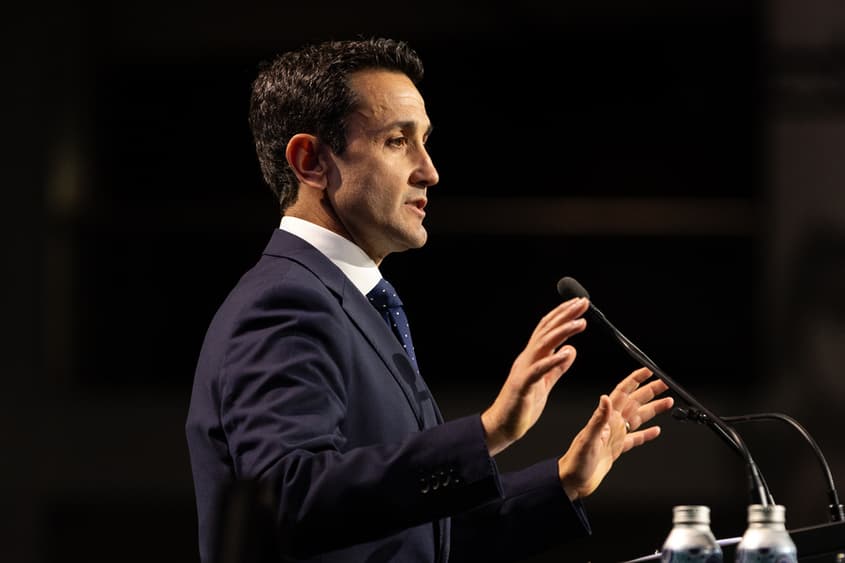
Image: AAP/Russell Freeman


Queensland’s LNP government has been accused of exploiting the summer holiday lull to avoid scrutiny of a contentious bill, which would lift the state’s ban on developer donations to political parties and candidates.
The Justice, Integrity and Community Safety committee has until early February to report back to the Queensland parliament on the Crisafulli Government’s proposed Electoral Laws (Restoring Electoral Fairness) Amendment Bill 2025.
The proposed changes to electoral laws were introduced during the final parliamentary sitting day of last year.
Speaking at the committee’s first public hearing, Director of the Australia Institute’s Democracy and Accountability Program, Bill Browne said the timing “limits the ability of the committee to investigate the consequences of the bill for Queensland democracy”.
“That is particularly concerning given that submissions, including from the Crime & Corruption Commission (CCC), have warned that the changes ‘are a significant departure from Queensland’s robust political donations framework’.”
In its own submission, the CCC raised concerns about “actual or perceived” corruption in the lead up to the 2032 Olympic Games, which Queensland will host.
The CCC initially proposed that such a ban be applied to local government, but the Palaszczuk Labor government took the proposal further and extended it to the state government.
Mr Browne called the LNP’s proposed changes a “retrograde step”. He told the committee that, “the ban is targeted, constitutional and based on well-established corruption risks.”
“Lifting the ban risks ‘clientelism’, where decision-makers put the interests of their patrons above the public interest.”
Mr Browne also pointed out that established political parties are not short of money.
“After the last election, the Liberal National Party was entitled to $8.6 million in taxpayer funding, the Labor Party to $6.7 million and the Greens and One Nation to millions of dollars between them.
“The taxpayer provides this funding to, in part, compensate political parties and candidates for lost revenue – so that they don’t need to take private money that could compromise public trust in decision-making.”
By shifting from a donation cap based on four-year terms to an annual cap, the proposed changes would also allow political donors to give four times as much as is permitted under today’s rules.
Mr Browne said that this “only serves to benefit incumbents who operate year-in year-out at the expense of new entrants”.
“The effect is that major party fundraising vehicles will collect four times as much money in corporate subscriptions, but a new political party or emerging independent candidate will effectively be constrained by the old cap.”
He told the hearing that a better alternative would be a mega-donor cap, as it would “limit any political donor’s involvement by capping the overall amount they can give, rather than how much they can give per recipient.”
The committee received 82 submissions on the proposed legislation, including from the Electoral Commission of Queensland, the Property Council of Australia and the Corruption Prevention Network Queensland Inc.
Advertisement
Electoral reform advocates are calling for the Albanese Government to follow the lead of state Labor governments and remove political parties from Australia’s federal postal vote process.
The latest voter polling gives the Malinauskas Labor Government a commanding lead one month out from the 21 March state election in South Australia. South Australia does not need a strong Opposition party, but it does need a strong Parliament. As sensational as a Liberal lower house wipe out would be, it is in the upper house where a Labor landslide would have the most immediate effect.
The rise of One Nation creates a surprising opportunity for progressive voters. There are now “safe” Liberal and National seats where One Nation could do very well.