Pressure mounts on Federal Government to end political party intrusion in postal vote applications
Electoral reform advocates are calling for the Albanese Government to follow the lead of state Labor governments and remove political parties from Australia’s federal postal vote process.
Fri 27 Feb 2026 01.00

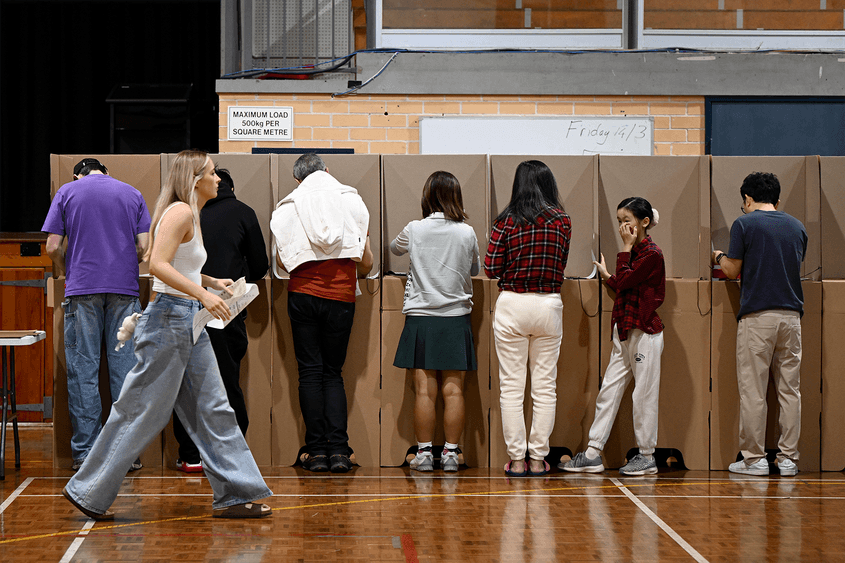
Photo: AAP Image/Lukas Coch


Electoral reform advocates are calling for the Albanese Government to follow the lead of state Labor governments and remove political parties from Australia’s federal postal vote process.
Victoria, Western Australia and South Australia have all legislated to ensure postal vote applications are submitted directly to their electoral commissions – cutting political parties out of the process. Last year, the Minns Labor Government in NSW also agreed to do so.
Tony Fairweather – a corporate lawyer and advocate for community independents – says “it’s a little bit strange” Prime Minister Anthony Albanese hasn’t followed suit, given it’s “a very simple legislative change.”
The push is gaining momentum as postal voting in federal elections remains high, after soaring to 14 per cent of all votes during the COVID-19 affected 2022 election.
“Concerns about postal vote applications through unsolicited outreach is the number one complaint we hear from voters at almost every federal election,” said AEC Commissioner Jeff Pope in the lead-up to the 2025 election.
“The AEC has shared these concerns with parliamentary committees in the past and will continue to do so in the future”
An inquiry into last year’s election is now underway with the Joint Standing Committee on Electoral Matters accepting submissions.
In his submission to the inquiry, Mr Fairweather wrote it was an opportunity for the Federal Government to “make a simple change” and “restore the independence and integrity” of the process.
“This unnecessary involvement [by third parties] leads to confusion, privacy concerns [data harvesting] and delays which undermine the integrity of the postal vote process,” he said.
The current practice allows for political parties to bundle the postal vote application form with party advertising material.
The form then goes back to the party, who are suspected of harvesting the data before sending it on the AEC.
“Political parties have inserted themselves into the postal voting process, circulating materials that appear official but actually harvest the person’s information for the party,” said Bill Browne, Director of the Australia Institute’s Democracy & Accountability Program.
In last year’s election, postal voting accounted for 13% of total votes, with more than two million Australians choosing to lodge their 2025 ballot papers in the mail.
A national survey conducted on behalf of the Australia Institute in July 2025 found 3 in 4 Australians (75%) support requiring PVAs to be sent directly to the AEC, with a clear majority across all voting intentions.
Less than 8% opposed the potential reform.
Mr Fairweather says he’s “puzzled by the politics” behind why the Federal Albanese Government is yet to legislate the change.
“The Liberal Party’s traditional stronger base is older voters, and they tend to vote more by using the postal vote.
“I see no sensible political judgment in retaining the practice because it’s advantage Liberal, and that’s obviously what all four Labor premiers have come to the view.”
He raised the possibility that “people get addicted to the data “.
“Perhaps parties believe capturing data is a ‘special sauce’ which has been built up for so long they don’t want to give it up.
It’s not the first time the Committee has evaluated the process.
Its final report on the 2022 federal election noted the “confusion and concern” it caused and recommended it cease.
However, the Government only “noted” the recommendation, stating “the voter remains free to return their completed form directly to the AEC, rather than via the entity that provided the material”.
In 2025, Independent Member for Curtin Kate Chaney took up the charge and introduced a private member’s bill to stop the practice. In its most recent submission, the AEC said the practice raises significant privacy concerns and drives many complaints.
“Party PVAs cause confusion, privacy concerns, and processing delays and ultimately can undermine confidence in the integrity of the process.
“In addition, driving up the number of postal voters introduces inherent risk of errors, disenfranchisement, as well as costs and delays to election results.”
The AEC revealed it recorded over 357,000 redirections to the AEC website from third-party postal voting websites.
“These websites required voters to add their details into an online form before being redirected to the AEC’s online postal vote application, providing third parties with sensitive personal data.”
Party involvement in postal vote applications is just one of the privacy and personal information concerns around elections. Others include exceptions in the Spam Act that allow parties to send mass spam text messages and personal voter information being shared with third parties.
“Political parties passed confidential data to other groups, without informing voters,” noted Mr Browne.
Related Articles
Popular policies would be a better revenue raiser than taking fossil fuel and gambling donations
Australians are naturally suspicious of corporate donations, especially when they come from vested interests with everything to gain from influencing government decision-making. But are these donations large enough to explain why politicians act the way they do? The reality is that political donations from harmful industries are small relative to the payments parties receive from you, the voter.