The Albanese Government has been accused of being a “government of gestures” that has “failed to meet the moment” after responding to two parliamentary inquiries into the consultancy sector and its ethics.
Wed 11 Feb 2026 01.00
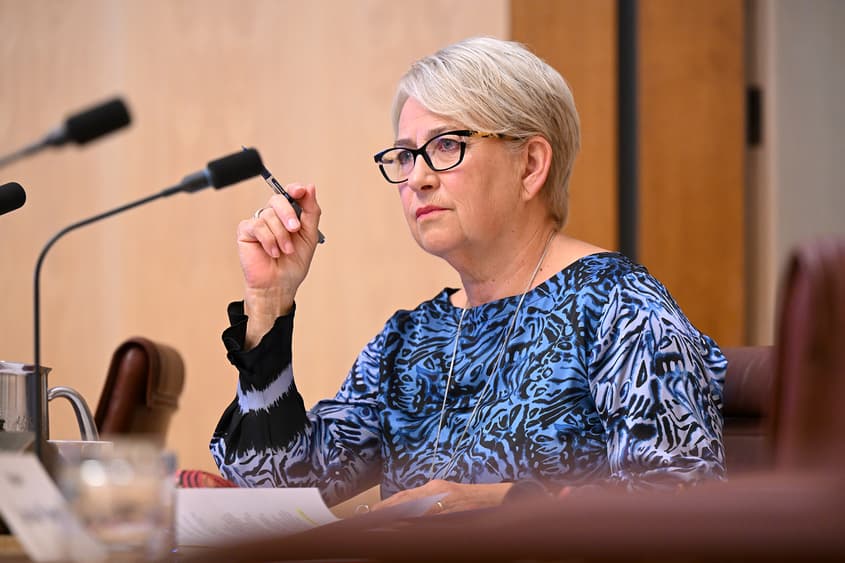
Senator Barbara Pocock at Senate Estimates. Photo: AAP Image/Lukas Coch


The Albanese Government has been accused of being a “government of gestures” that has “failed to meet the moment” after responding to two parliamentary inquiries into the consultancy sector and its ethics.
The cross-party inquiries were triggered by revelations in 2023 that some senior partners at consultancy giant PwC were misusing confidential government information to drum up business and help multinational corporations avoid paying more tax.
The fallout saw more than 700 staff and dozens of partners leave the firm, including chief executive Tom Seymour, and PwC try to control the damage by spinning its government relations arm off into a new firm called Scyne.
“We discovered a tidal wave of malpractice, poor governance and structural failures,” said Senator Barbara Pocock, Australian Greens spokesperson for finance and public sector.
She explained how “so much of the Parliament’s time and resources have been spent uncovering unethical behaviour in the consultancy sector.”
Which is why the government’s long awaited response has received heavy criticism.
The Finance and Public Administration References Committee made 12 recommendations in its report tabled in June 2024.
It called for greater transparency around Commonwealth contracts with consultancies and advised the government to improve the training of procurement officials, develop a central register for conflicts-of-interest breaches for government entities and for all departments and agencies to publish biannual statements on consultancy contracts worth $2 million or more.
The Government agreed to only three of the 12 recommendations.
It “noted” a further 22 recommendations made later by the Greens.
The final report by the Parliamentary Joint Committee on Corporations and Financial Services was tabled in November 2024.
In its submission, the Australia Institute argued governments should “better manage conflicts of interest by adopting guidelines on how to identify and resolve conflicts of interest, introducing a strict revolving door policy and banning political contributions from government contractors”.
The Commonwealth’s response to the final report was to “note” all 40 recommendations.
“The government’s response fobs off our report with baby steps that don’t meet the scale of this crisis,” argued Senator Pocock. “This is a government of gestures.
“Despite the extensive evidence and comprehensive recommendations, the government is once again choosing to tinker around the edges, instead of committing to actual reform.
The Australia Institute’s Democracy & Accountability Program Director Bill Browne said the result was “disappointing”.
He said the two inquiries had shown the parliament “at its best: Labor, Liberal and Greens senators working together to expose the shady business tactics and misleading claims of the consulting industry”.
“The recommendations from those inquiries were strong but proportionate and backed up by hundreds of pages of submissions and evidence,” he said.
In the wake of the PwC tax leaks, the Department of Finance banned the firm’s staff from working on government contracts while investigations are ongoing.
Research undertaken by the Australia Institute during the height of the scandal showed it was a popular move with polling research finding most Australians supported a long-term ban on the consulting firm after it breached public trust.
However, in August 2025, the consultancy giant was allowed to recommence engagement, with the Finance Department satisfied it had implemented policies to “to meet the ethical standards of governance, culture, and accountability”.
The decision was met with sharp criticism from the Greens, which pointed out investigations by the Tax Practitioners Board (TPB), Australian Federal Police (AFP) and National Anti-Corruption Commission (NACC) are still ongoing.
“The fact that the government let PwC back into the fold before … investigations had concluded is both baffling and pathetic,” said Senator Pocock.
“The government’s refusal to clean up the unethical practices rife across the consultancy sector is the reason why the Greens introduced a bill to parliament.”
She said under current legislation, the Commonwealth doesn’t have the power to ban a contractor for unethical conduct, and the bill will give Canberra “the teeth it currently lacks”.
“We must close the legal loopholes that allow government contractors who behave unethically to get away with it.”
Mr Browne added: “In the absence of Government action, both Greens and Liberal senators have introduced private members’ bills to keep the work of the inquiries alive. The Australian Senate, at least, can give these issues the attention they deserve.”
“The Australian Government is one of the biggest and most powerful clients any consulting firm would have,” pointed out the Australia Institute in its submission.
“That consulting firms are willing to breach the trust placed in them by the Australian Government, cut corners on its contracts and treat it as a cash cow is a worrying hint at how they must treat their smaller and less powerful clients.”
The consulting firm behind the Bureau of Meteorology’s (BoM) heavily criticised website has been awarded another multi-million-dollar government contract to build a new climate platform.
Advertisement

The easiest way to understand the structural shift taking place in Australian politics is to understand that you can now win a landslide majority of seats in parliament even when your primary vote declines.
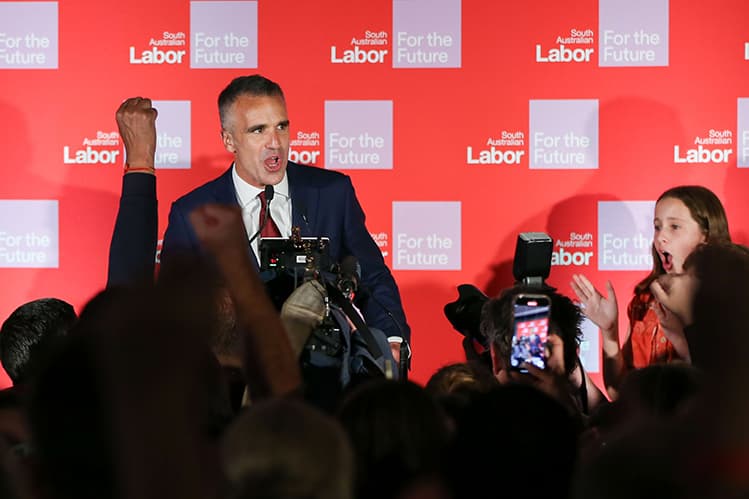
On Saturday, South Australians voted decisively to re-elect the first-term Malinauskas Labor Government. While we don’t know exactly how the 47 lower house seats will fall, Labor will have a super-majority having won about 35 seats.