Wed 11 Feb 2026 01.00
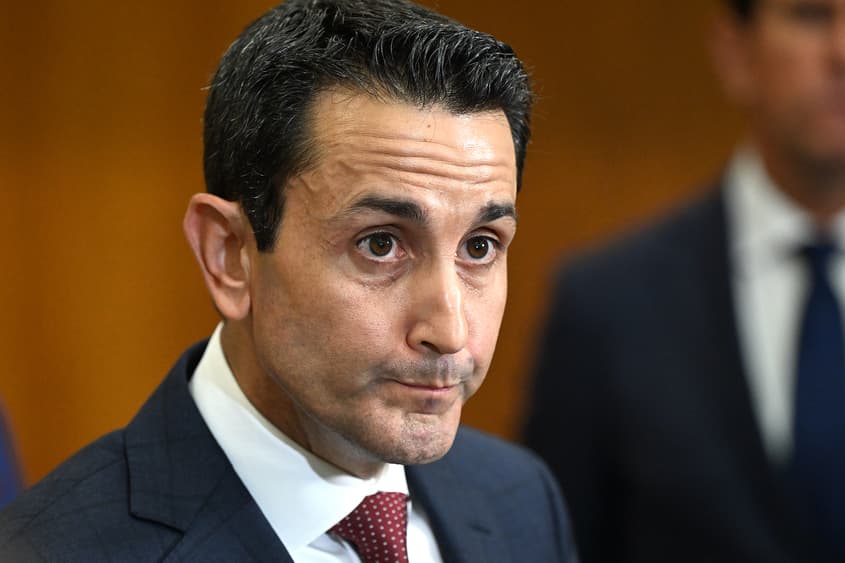
Photo: AAP Image/Darren England


If only we knew then what we know now.
In August 2025, Queensland’s Liberal National Party (LNP) government announced it was abandoning a court case against Adani over unpaid coal royalties, a case that started in 2023 under the Labor government.
The decision was part of a deal between Adani and the LNP government, under which the government agreed to end Labor’s court case; in return, Adani promised to spend $50 million on expanding its Galilee Basin coal mine … and maybe more later.
Even at the time, this agreement seemed odd. Why would a state government walk away from potential public money in return for a vague promise by a company to spend money on its own business?
Today, we know two key pieces of information of which the public was unaware in 2024—and that make the agreement even more concerning.
First, many of the details of the case were kept commercial in confidence, so much so that it wasn’t even clear how much money the government was seeking. As a result, the public didn’t know how much the deal was worth. How much money was the government leaving on the table?
The answer emerged in October 2025. The Australia Institute used data from the corporate regulator and the Queensland Government to show that Adani had been selling coal to friendly companies in India for $100 per tonne … while coal prices were reaching $300 per tonne. This low sale price meant the Queensland government received far less in royalties than it would have done if the coal was sold at market rates. We estimated the underpayment was worth around $400 million.
The Australia Institute’s estimate was tabled in Parliament by Steven Miles, who was Queensland’s Premier when the court case was filed. Miles’s former Treasurer Cameron Dick went further, stating (on page 3,609) that Adani’s windfall could be “at least $500 million”.
If a government giving a coal company half a billion dollars in return for a promise to spend $50 million on itself seems bad, hold on, because it’s about to get a lot worse.
The second piece of information that the public was missing was that Adani made unprecedented donations to the LNP in the lead-up to the 2024 election.
Adani has traditionally been a modest political donor, making no donations at all in some years, and a few thousand dollars’ worth in others. Its biggest payments until now have been around $100,000 to the LNP in 2019 and 2022, both years when there were federal elections.
Things were different in 2024. Data released just last week by the Australian Electoral Commission shows that in the lead up to the Queensland state election, Adani donated $600,000 to the LNP—far more than its previous donations and enough to make it the single largest donor to the LNP in that year by a considerable margin. Adani also gave $100,000 to the Katter Party prior to the election.
To spell it out, Adani gave thousands of dollars to the Queensland LNP, and the Queensland LNP government walked away from a court case that could have cost Adani hundreds of millions of dollars. Are these things connected? Who can say? All the LNP and Adani would provide to the Guardian was an insistence that they have complied with their disclosure requirements.
Why are we only finding out about this now? It’s because these donations were made into the federal accounts of the Queensland LNP, allowing them to avoid state donation laws that would have seen them disclosed in near-real time. The federal laws have a lag of up to a year and a half.
Ultimately, this situation emphasizes the importance of transparency. After all, imagine if Queensland’s voters had known before the 2024 election that a company at the centre of various fraud and bribery scandals had just become the largest donor to the LNP.
Imagine if Queensland’s journalists had known this—or about the amounts of money involved—when reporting on the deal to abandon the legal action.
It’s important to imagine how the past could have been different—and the one piece of good news is that federal donation disclosure laws are getting stricter from the middle of this year, removing the loophole that allowed Adani’s donations to remain secret until after the election. It will be harder to keep Queenslanders in the dark in the future—but that’s no remedy for the sins of the past.
The public has a right to know why Adani donated so much money to the LNP, when it had never done so before. This should be at the centre of media coverage of the company in Australia. It also has a right to know why the state government is refusing to explain why a major donor seems to have been given such an outrageously good deal.
Premier David Crisafulli could choose to disclose all interactions with Adani and provide an official estimate of alleged royalty underpayment. The federal side of the LNP has also remained silent; journalists can and should ask federal Queensland figures like Nationals leader David Littleproud or Senator Matt Canavan about the payments.
Senator Canavan, in particular, has spent years promoting Adani’s mine and pushing for it to receive public subsidies. He met company founder Gautam Adani on at least one occasion; it might be interesting to know whether he knew about the donations and why Adani chose to make far larger donations in 2024 than it had ever done before. But despite being Adani’s biggest cheerleader in Australia, Senator Canavan has rarely, if ever, been asked about Adani’s fraud and bribery scandals, let alone the latest donation data.
Getting to the bottom of the Adani donations and royalty deal is important, and not just for the hundreds of millions of dollars that could be reclaimed for the Queensland public.
The strength of Australian democracy is built on trust in our institutions – the organisations that contest our elections, collect public revenue and decide what to do with it.
When these organisations lose trust, they can’t function and lose relevance. Organisations like the LNP.
Rod Campbell is research director at the Australia Institute
The consulting firm behind the Bureau of Meteorology’s (BoM) heavily criticised website has been awarded another multi-million-dollar government contract to build a new climate platform.
The easiest way to understand the structural shift taking place in Australian politics is to understand that you can now win a landslide majority of seats in parliament even when your primary vote declines.
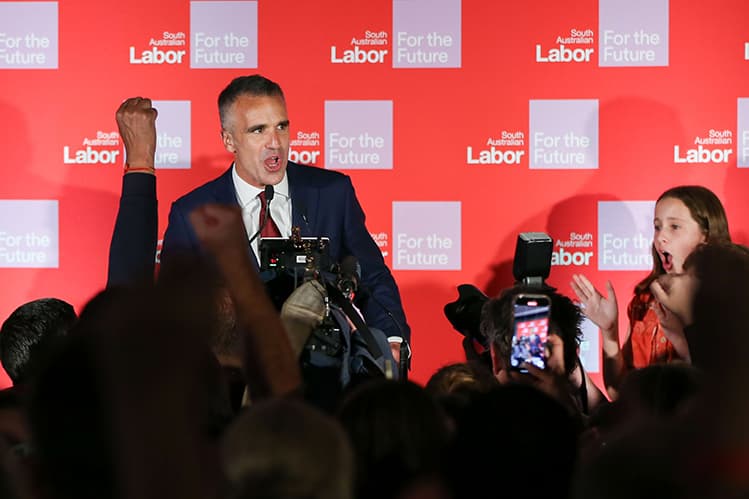
On Saturday, South Australians voted decisively to re-elect the first-term Malinauskas Labor Government. While we don’t know exactly how the 47 lower house seats will fall, Labor will have a super-majority having won about 35 seats.