The gas export boom has been selling Australians short for the last decade, in more ways than one. It has pushed domestic prices through the roof, scarred Queensland landscapes, polluted waterways and destroyed fertile farmland.

Wed 18 Feb 2026 01.00
Photo: AAP Image/Glenn Hunt


The gas export boom has been selling Australians short for the last decade, in more ways than one. It has pushed domestic gas prices through the roof, scarred Queensland landscapes, polluted waterways and destroyed fertile farmland.
Given Australians are increasingly becoming aware of the ways in which companies like Origin and Santos are profiteering at their expense, the Queensland Government is scrambling to prolong an industry facing a global supply glut, falling profits and dwindling social licence.
Last week, the state’s LNP Government opened up a 750 square kilometre piece of the Taroom Trough – the size of Singapore – for oil and gas exploration. Omega Oil and Gas has been awarded a permit to drill the land, which sits 300km west of Brisbane.
Clearly pining for a bygone era, the Government gushed about the “potential to open up Australia’s first major new oil province since the 1970s”.
But it’s no longer the 1970s. We’re reached a point in time where gas is looking less and less appealing for everyone involved.
The gas industry contributes to a quarter of Australia’s total greenhouse gas emissions. Queensland farmers have seen devastation reaped in their backyards. People all over Australia are facing escalating climate disasters.
Even Origin’s profits are plummeting: their latest half-year financial report showed net profits from their gas export business were down 21% in the first half of the 2025-26 financial year. CEO Frank Calabria expects LNG prices to stay weak for the rest of the year.
There are now 10,000 wells pockmarking Queensland, 4000 of which have already been decommissioned. When the wells stop producing gas, they sit there as permanent monuments to corporate greed.
That’s why the gas industry’s efforts are looking increasingly desperate.
The Taroom Trough exploration will require drilling wells up to 4 kilometres deep – far deeper than typical coal seam or conventional gas operations. Going this deep is expensive, challenging and risky, signaling that the industry is scraping the bottom of its resource barrel. The most accessible gas wells are starting to run dry.
Queensland Resources Minister Dale Last’s statement shows he’s well aware of his PR problem. The word ‘domestic’ is used three times in reference to supply and industry, but most of the Taroom Trough’s gas will be destined for export, as 80% of Australia’s gas already is.
The Minister’s statement touts the importance of gas in fertiliser production. It’s a comically weak attempt to appease farmers who are fed up with gas companies exploiting their lands and livelihoods.
As long as governments across Australia keep ignoring the evidence and trotting out industry spin, communities will keep paying the price. Taroom Trough isn’t the only gas project threatening Australia’s landscapes and climate targets.
Origin is proposing a massive gas well expansion across two major river catchments in Queensland, which would suck billions of litres of water and clear koala habitats. Some of the wells are close to the town of Tara, where residents will suffer air and noise pollution.
Across the border in North West New South Wales, Santos’ Narrabri gas project is facing fierce opposition from Gomeroi Traditional Owners and farmers. The project would see 850 wells drilled, carving up the Pilliga forest and productive farmland.
The human and environmental costs of these projects are enormous. From depleted aquifers to destroyed wildlife habitats to worsening climate events, the impacts will be felt widely. And for what benefit to the average Australian, who faces higher home insurance premiums and rising living costs? Most multinational gas exporters don’t even pay tax.
It’s time for state and federal governments in Australia to do what they’re elected to do: put communities first, instead of gas companies desperately trying to prolong their operations while the planet burns.
Ellen Roberts is the National Coordinator of Lock the Gate.
Advertisement

The Albanese Government is being urged to rule out changes to the Electric Car Discount in the May budget, as global fuel volatility intensifies pressure to ease the cost of living.
Pressure is mounting on the Albanese Government to introduce a 25 per cent gas export tax, with new figures revealing Australia misses out on almost $350 million in revenue every week.
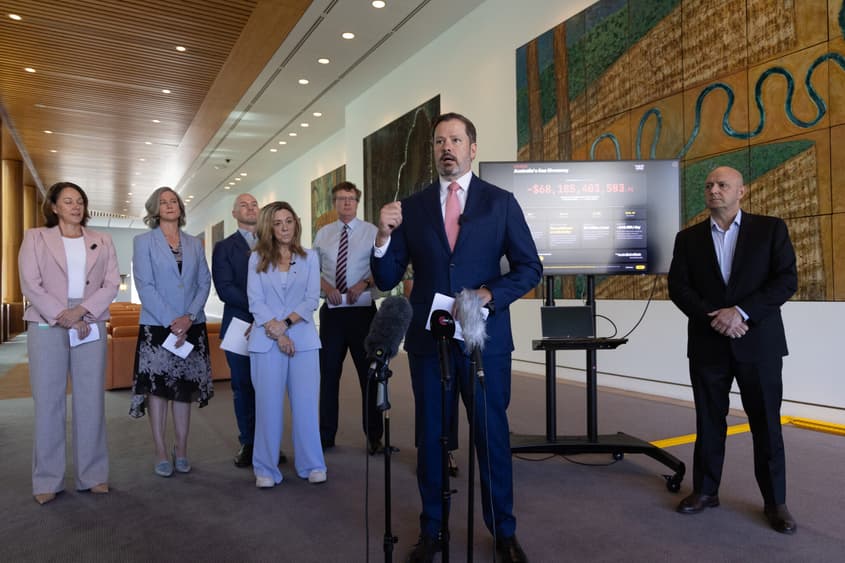
Midnight Oil, Missy Higgins and around 150 other prominent musicians have added their voices to the growing chorus of Australians calling on the Albanese Government to introduce a 25 per cent tax on gas exports.