To the casual observer, the long overdue reform to our federal environment laws – the Environment Protection and Biodiversity Conservation Act 1999 (Cth) (EPBC Act) – looked like a win for nature and climate.

Thu 12 Feb 2026 01.00
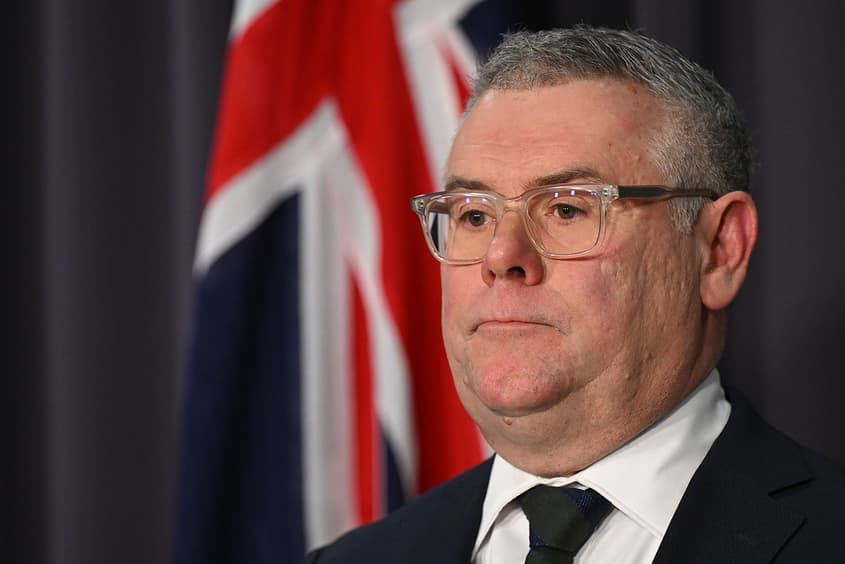
Photo: AAP Image/Lukas Coch


To the casual observer, the long overdue reform to our federal environment laws – the Environment Protection and Biodiversity Conservation Act 1999 (Cth) (EPBC Act) – looked like a win for nature and climate.
A deal with the Greens, deforestation and forestry loopholes closed, a new independent ‘cop on the beat’, fast-tracking of coal and gas projects stopped: these are the key messages the public heard on repeat, and they were hard-won improvements upon what was an incredibly shoddy first draft of the laws introduced to the Australian Parliament.
But buried deep in the hundreds of pages of boring technical drafting is a fairly stunning capitulation to the likes of Woodside, Inpex and Santos.
It amounts to an effective carve-out from federal environment laws for the offshore oil and gas industry that could see the winding back of First Nations rights and environmental protections.
The changes could also open the door for Resources Minister Madeleine King, who is known for her full-throated promotion of the fossil fuel industry, to regulate the highly risky carbon pollution dumping industry (already a “proven failure”, per Louise Morris).
The changes are somewhat reminiscent of another capitulation to the fossil fuel industry: the controversial “sea dumping laws” passed by the Albanese Government in late 2023 which paved the way for Santos’ proposed (still stalled) carbon pollution dumping project in Timor Leste waters.
The passing of those laws was preceded by Foreign Affairs Minister Penny Wong admonishing Opposition senators in Parliament for failing to support the laws with these famous words: “You said ‘no’ to Santos. You then said ‘no’ to Woodside. You’ve said ‘no’ to Inpex.”
Changes to the EPBC Act last year give Minister Murray Watt the power to declare that a wide range of offshore gas activities regulated by the offshore energy regulator, NOPSEMA, do not require approval under the EPBC Act if they are given an approval by NOPSEMA. There are some constraints on this power, but they are discretionary, subject to Ministerial satisfaction (ie a subjective test), and these bare protections are already looking alarmingly weak.
Using this power would transfer significant and quite wide-ranging powers to Resources Minister Madeleine King to change the rules for regulation of the offshore gas industry, as long as there is such a declaration in place by the Environment Minister.
Companies like Santos, Inpex and Woodside have been fighting for this change for years, and with renewed intensity since their modus operandi was upended by the Federal Court’s landmark (but common sense) decision in the Tiwi Islander-led case Tipakalippa, which clarified that offshore gas regulations did actually require gas companies to consult with First Nations communities and people about the potential environmental and cultural harm their fossil fuel projects might cause.
Since then, with Minister Madeleine King’s support, the gas industry has been lobbying to change the regulatory framework for offshore oil and gas, and specifically the consultation requirements which they describe as cumbersome, ambiguous and unworkable since the Tipakalippa case (although the judgment only clarifies what should have always been obvious to gas companies, that they are required to consult with affected First Nations communities in a meaningful way about their projects). However, they encountered a fairly major roadblock in the form of our national environment laws.
That’s because NOPSEMA only has delegated power (via an endorsed program) with respect to EPBC Act assessments and approvals relating to the offshore oil and gas industry. This delegation occurred after a strategic assessment of the offshore gas industry over a decade ago, which involved extensive and rigorous assessment and public consultation.
The problem for the gas industry is that the delegation does not automatically cover variations or changes to the offshore petroleum regulations. Importantly, the delegation also does not empower NOPSEMA to regulate certain offshore carbon pollution dumping activities, as the injection and storage of carbon dioxide was not part of the original strategic environment assessment. So, Minister King was not able to easily change the regulations within her portfolio as demanded by the fossil fuel industry.
There are some pretty compelling reasons for these safeguards. They ensure that the regulation of polluting and risky offshore gas cannot be changed or varied in a way that undermines the standards of protection originally endorsed by the Environment Minister, and ensure appropriate scrutiny of any proposed changes. They also ensure that risky new activities like carbonpollution dumping can’t simply be added to NOPSEMA’s remit (because the arrangements haven’t been properly assessed under our federal environment laws).
The Albanese Government’s first attempt to address the gas industry’s gripes failed. In 2024, the Albanese Government sought to make amendments to the Offshore Petroleum legislation which were in similar terms. These amendments were withdrawn following strong opposition by environment groups and First Nations communities.
But the gas industry is nothing if not doggedly persistent.
The chaos of the environmental law reform last year (“will Labor do a deal with the Greens, or the Coalition?”) provided the perfect moment for the Albanese Government to seize the opportunity, and seal the deal, with maximum political cover and minimum public controversy.
While these changes have not yet commenced, it is possible that Japanese gas giant Inpex is already manouevring to take advantage of a future, more favourable, regulatory environment for the world’s largest offshore carbon pollution dumping project destined for Middle Arm in Darwin and the Commonwealth marine waters adjacent to the Northern Territory.
Only time will tell when, if and for whom the Albanese Government proposes to use these new powers to effectively exempt offshore gas regulation from our federal nature laws.
Kirsty Howey is Executive Director of the Environment Centre NT. She has a PhD on development in northern Australia and was previously a native title and environmental lawyer.
Advertisement

Environment Minister Murray Watt is facing renewed pressure to intervene and protect Tasmania’s heritage-listed Macquarie Harbour amid deepening public opposition to the state’s salmon farming industry.
The gas export industry has been free riding off Australians for decades.
Right now, right across the country, communities are being forced to come to terms with the rapidly escalating frequency, intensity and cost of climate disasters.