The first full academic year for Adelaide University – the product of a merger between the University of Adelaide and University of South Australia – is about to start. The merger cost a total of $500 million with a significant portion of that going to consultants. It was Deloitte that won the contract worth $185 million to manage the merger.
Thu 19 Feb 2026 01.00


The first full academic year for Adelaide University – the product of a merger between the University of Adelaide and University of South Australia – is about to start. The merger cost a total of $500 million with a significant portion of that going to consultants. It was Deloitte that won the contract worth $185 million to manage the merger.
Co-Vice Chancellors at the time, Professor Peter Hoj AC and Professor David G Lloyd wrote to the Senate Education and Employment Legislation Committee responding to a Senate Estimates question on notice saying:
The project could not have been delivered with existing resources alone. Our staff are experienced and dedicated, but it would be unreasonable to expect them to manage a merger of this size to create Adelaide University while simultaneously maintaining student experience and the delivery of high-quality teaching, learning and research at our two foundation universities for nearly three years.
$185 million sounds like a lot of money because it is. The contract, which ran from September 2023 to 5 January 2026, was worth around $399,000 per day, or equivalent to the annual salaries of a professor and a senior lecturer combined. Put another way, the consulting contract was the equivalent to the salary of 420 professors and 420 senior lecturers for a year.
Was the level of complexity of the merger enough to justify spending the same amount as it would on the annual labour of 840 highly educated academics?
One of the stated goals of the merger was in was to achieve an increase in global rankings. In June last year when the QS Global rankings came out, Adelaide University came 82 – just seven places higher than the year before the merger.
Adelaide University is not alone in spending millions on consultants. In 2023, ANU spent over $50 million on consultants at the same time as it was planning a restructure and a large number of staff redundancies – a policy it has since reversed after huge public and political outcry. In their analysis of 2023 annual reports, the National Tertiary Education Union calculated that universities spent a total of over $733 million on consultants.
The university sector’s continued high spending on consultants and the uncertainty staff face may well be contributing to a crisis in higher education staff mental health.
Adelaide University’s own Professor Maureen Dollard published results of a university sector survey last week indicating what many have been saying for the past few years: psychological safety in Australia’s higher education sector is in very poor shape.
Universities are alike in high spending on consultants and alike in poor psychological safety for staff. The low state of staff morale at UTS and ANU in particular has received plenty of coverage in the press. What Professor Dollard’s work shows in this new study is how this phenomenon is present throughout the higher education sector.
It is past time for a re-evaluation of how universities engage with consultants and how they can be better employers and better providers of the education students need.
This is an edited extract from "The Ruin of Magic" by Kate Holden, published by Black Inc.

This is the new foreword, written by Clare Wright, for the new updated edition of 'See What You Made Do' by Jess Hill

Last year the Australian National University (ANU) was getting some bad press, so they engaged a company called Bastion Reputation to help with the media fallout from restructures and the heavily criticised leadership of its Vice Chancellor, Professor Genevieve Bell. The meeting cost $6,000, which is more than ANU paid me for a full semester of tutoring in 2023. According to a response to an FOI request, the meeting did not warrant any notetaking and was “not significant”.
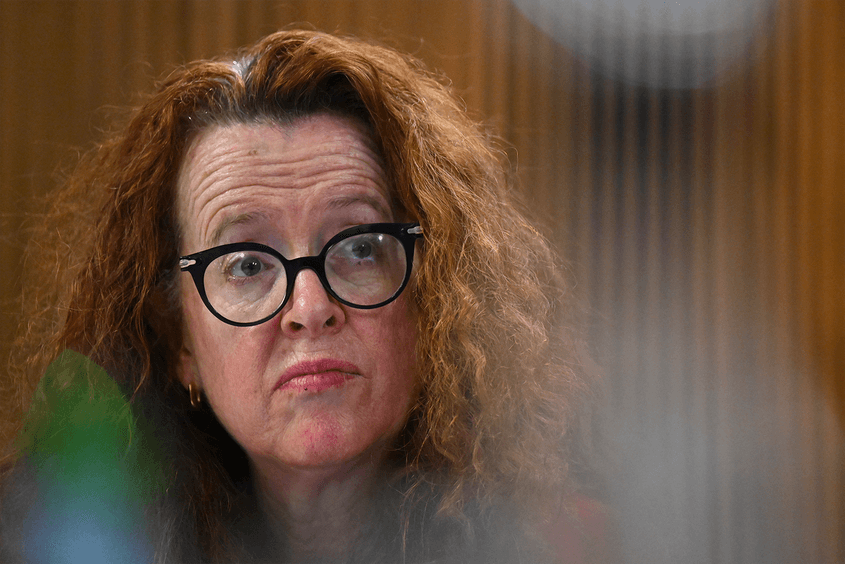
Australia has more than $11 billion sitting in philanthropic funds that have already received generous tax deductions. Much of that money is intended for public good, but only a small portion is required to reach charities each year.