New research has revealed that Australian governments are providing the equivalent of $31,020 a minute in fossil fuel subsidies as households continue to struggle with rising petrol and electricity prices.
Thu 12 Mar 2026 12.00

Photo: AAP Image/Lukas Coch


New research has revealed that Australian governments are providing the equivalent of $31,020 a minute in fossil fuel subsidies as households continue to struggle with rising petrol and electricity prices.
The Australia Institute analysis shows that state and federal governments will provide $16.3 billion in subsidies in 2025/26 to some of the biggest, most profitable companies in Australia, an increase of 9.4 per cent on last financial year.
“It makes no sense to be subsidising profitable multinational mining companies while short-changing Australia’s age pensioners and those living with disabilities,” said Rod Campbell, research director at the Australia Institute.
According to the report, the overall cost of the subsidies is now growing at a faster rate than funding for the National Disability Insurance Scheme (NDIS), which increased by only 7.6 per cent over the same period.
“Fossil fuel subsidies harm the budget and make climate change worse,” said Mr Campbell.
“Cutting back subsidies like these, which make the community and the climate worse off, are an obvious priority for any government that says it is concerned with the budget bottom line, inequality, or climate change.”
The biggest fossil fuel subsidy is the Federal Government’s Fuel Tax Credit Scheme (FTC), which costs $10.8 billion and mainly benefits multinational mining companies.
It is projected to grow to more than $13 billion by 2028/29, increasing faster than federal spending on most social services, including disability assistance, childcare subsidies, aged care, and veterans’ care.
“Australian governments have refused to crack down on fossil fuel subsidies, while complaining about the cost of looking after people,” said Mr Campbell.
In June 2025, Fortescue Metals broke ranks with the mining industry, calling for the Albanese Government to wind back the Fuel Tax Credit Scheme.
It proposed a $50 million cap on the amount companies can claim, arguing the current scheme discourages the transition away from diesel-powered trucks.
The report noted that while the AUKUS agreement is “pushing Australian defence spending higher”, the Fuel Tax Credit Scheme is one of the most expensive items in the Federal Budget, ranking 16th in 2025–26, above spending on the Royal Australian Air Force.
Mr Campbell said, “The Australian Government itself seems open to reform, joining the Belem Declaration on the Transition Away from Fossil Fuels at the last round of UN climate talks in Brazil. Under this declaration, governments recognise “the need to phase-out inefficient fossil fuel subsidies as soon as possible”.
The analysis comes amid growing calls for Canberra to implement a 25 per cent tax on gas exports.
The tax – proposed by the Australian Council of Trade Unions (ACTU) – would raise $17 billion a year and has gained backing from the Greens and independent Senator David Pocock, who has called for a Senate inquiry into “the great gas giveaway”.
The proposed inquiry would scrutinise the “extraordinarily low” returns from the cash-rich LNG industry.
Senator Pocock said “Australians have had enough of multinational gas companies profiting off our resources without providing a fair return.
“We get one chance to capture the benefits of the LNG boom and invest in the things Australians need most: housing, health, education.
“Currently we are squandering what Norway has turned into a $3 trillion sovereign wealth fund.”
In February 2026, Nobel Laureate and economist Professor Joseph Stiglitz also urged the Australian Government to “follow the money” and start imposing “a very, very high tax rate” on the country’s natural resources.
“Get the highest value from whoever can extract your resources,” he advised.
The report criticised the Australian Government for not taking serious action and continuing to “greenwash” its poor climate policies.
“The Australia Institute has been calling for curbs on fossil fuel subsidies for over 20 years. Hopefully, this year’s report will be the last annual analysis of fossil fuel subsidies that finds another record level of assistance to the very activities that are making climate change worse.”
Advertisement

New research shows fossil fuel subsidies will reach $16.3 billion in 2025–26, rising faster than the NDIS. Handouts to mining giants are growing faster than support for Australians with disability.

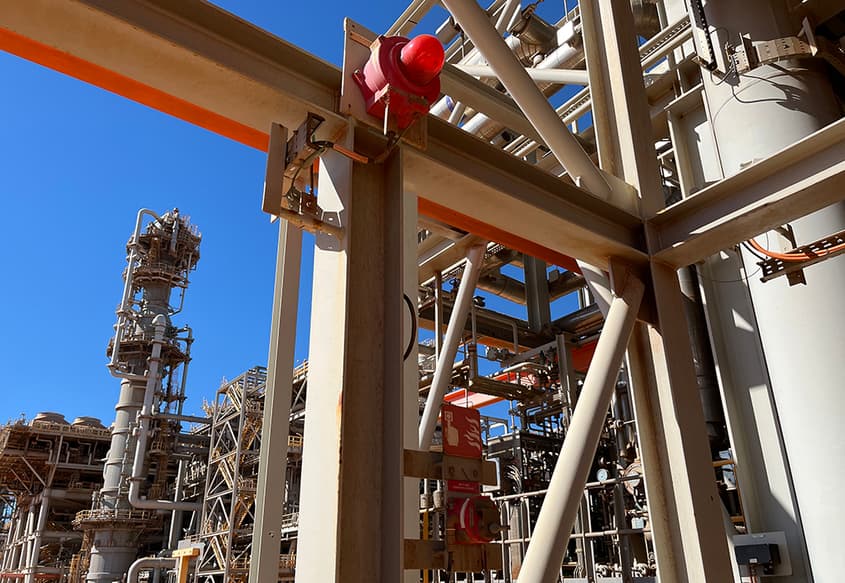
By simply diverting uncontracted gas to the domestic market before it is exported, and putting a 25% tax on the contracted export gas to bring some much needed revenue back to Australians, it would also reveal something the gas industry rarely acknowledges: Australia does not have a gas shortage problem. It has a gas export problem.

Over the past 10 years, the number of new homes has been growing faster than the population. Read that sentence again if you need to, but doing so won’t change the facts.