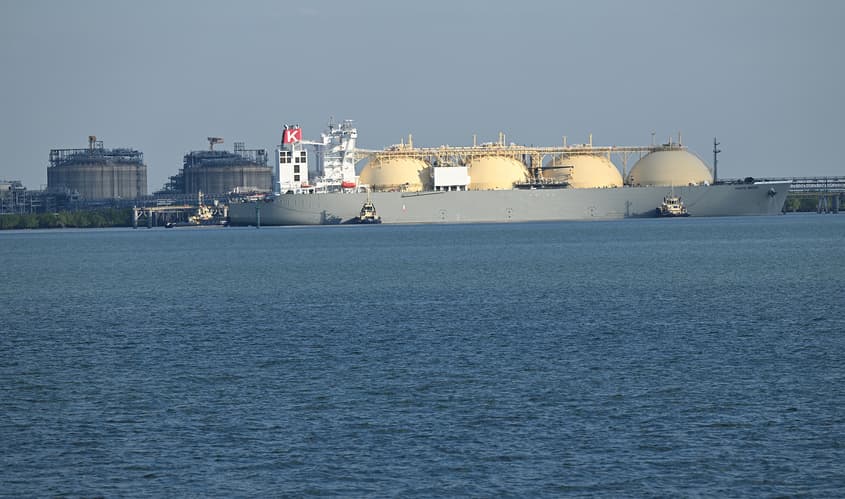
New South Wales is the first state in Australia to ban new coal mines. The State Government announced on Friday that it will no longer consider applications for new mines or allow new coal exploration, while extensions to existing mines will still be considered.
Fri 20 Mar 2026 18.00
Photo: AAP Image/Bianca De Marchi


New South Wales is the first state in Australia to ban new coal mines.
The State Government announced on Friday that it will no longer consider applications for new mines or allow new coal exploration, while extensions to existing mines will still be considered.
This is a monumental policy shift and the first real acknowledgement by an Australian Government that fossil fuels must be phased out. It is important because the first step towards phasing out fossil fuels is to stop approving new fossil fuel projects.
Coal is one of the main causes of climate change and Australia is one of the largest exporters of coal in the world. NSW produces about half of Australia’s coal exports and is home to the world’s largest coal export port in Newcastle.
The United Nations and the world’s scientists could not be clearer – there is no room for new coal, oil or gas projects if we are to avoid dangerous climate change. “When governments sign new oil and gas licences, they are signing away our future,” said UN Secretary-General António Guterres in 2024.
“The G20 – the biggest emitters responsible for 80% of those emissions – must step up and lead, by phasing out the production and consumption of fossil fuels and stopping their expansion immediately.”
Yet instead of closing coal mines, Australia’s governments have been looking to open more. There are 42 coal and 45 gas projects currently under development in Australia.
Mining lobbyists claim that it is only important to reduce the demand for coal. They say that if Australia doesn’t dig it up, someone else will.
But we already have proof that’s not true. If we look to South Korea, it’s obvious that limiting the supply of coal leads to countries phasing out coal sooner.
Over the last decade, three South Korean companies had planned coal mines in NSW. Combined, these projects would have seen major, state-backed Korean companies invest $3.6 billion in mines that would have produced 13 million tonnes of coal each year. The Korean Government would have been deeply invested in Australian coal mines beyond 2050.
All three new coal mines were ultimately defeated by local community opposition in Bylong Valley, the Southern Highlands and Central Coast. Since the rejection of these mines, Korean imports of Australian coal plummeted and in 2025, South Korea committed to phasing out coal by 2040.
This shows that Australian decisions to reduce coal supply encourages other countries to look for cleaner alternatives and leave coal behind. As one of the world’s largest exporters of coal and gas, Australia has a huge and influential role to play in helping other countries accelerate the phaseout of fossil fuels.
Unsurprisingly, the NSW Minerals Council and the Mining and Energy Union were ‘disappointed’ and ‘perplexed’ with the NSW Government ban on new coal mines.
Previous economic modelling conducted by the Australia Institute shows that Australia’s economy would be barely affected by a moratorium on approval of new coal mines and mine expansions.
That’s because more than 99% of the Australian workforce is not employed in coal industry. It’s a small employer. The Adani coal mine infamously promised its new coal mine would create 10,000 jobs, but according to Adani’s ASIC statements it employs just 84 people directly and around 1,200 contractors.
Ending coal will have a minimal impact on state budgets because coal royalties are a small part of state revenue. That’s true even in the big coal states of NSW (2% of revenue) and Queensland (7%). In other words 95% of revenue in the biggest coal states does not come from coal.
A moratorium on new building new coal mines and on expanding existing ones would allow for a gradual phase out of the industry, which would in turn minimise the social and economic adjustment associated with worldwide commitments to reduce greenhouse gas emissions.
Australia’s Pacific Island neighbours, led by then-President of Kiribati Anote Tong, have been advocating for a global ban on new coal mines since 2015, when President Tong wrote to world leaders ahead of the Paris climate summit, urging them to support a moratorium on new coal mines.
Today is an important day for the Pacific leaders who led this call internationally and the thousands of community activists across NSW that have defended their land and the climate from coal expansion. Thanks to their efforts, NSW has taken the first step towards Australia’s fossil fuel phase out. There are many more to go.
For years, the idea of properly taxing gas exports has been treated as politically untenable - something governments approached dismissively, if at all. But as global conflict pushes up energy prices and gas company profits surge, that dismissiveness is starting to look like negligence.
Advertisement

The Federal Government is facing calls to intervene and stop the expansion of a central Queensland coal mine that environmental groups have labeled a “carbon bomb”.
Last week, Senator David Pocock proposed a Senate inquiry into the “extraordinarily low rates of revenue Australians receive from the export of our gas resources.”