This morning, at Senate estimates, the Department of Climate Change, Energy, the Environment and Water (DCCEEW) were asked about the drop in emissions since 2005.
Oddly, the DCCEEW official suggested that in 2024 (the most recent calendar year that they have the full data for), emissions were 23% below 2005 levels. I say ‘oddly’ because the data released quarterly suggests that emissions were 28% below 2005 levels.
Either way, it doesn’t really matter, because whatever the percentage fall, almost all of the drop was due to the inclusion of land clearing.
Why is this important?
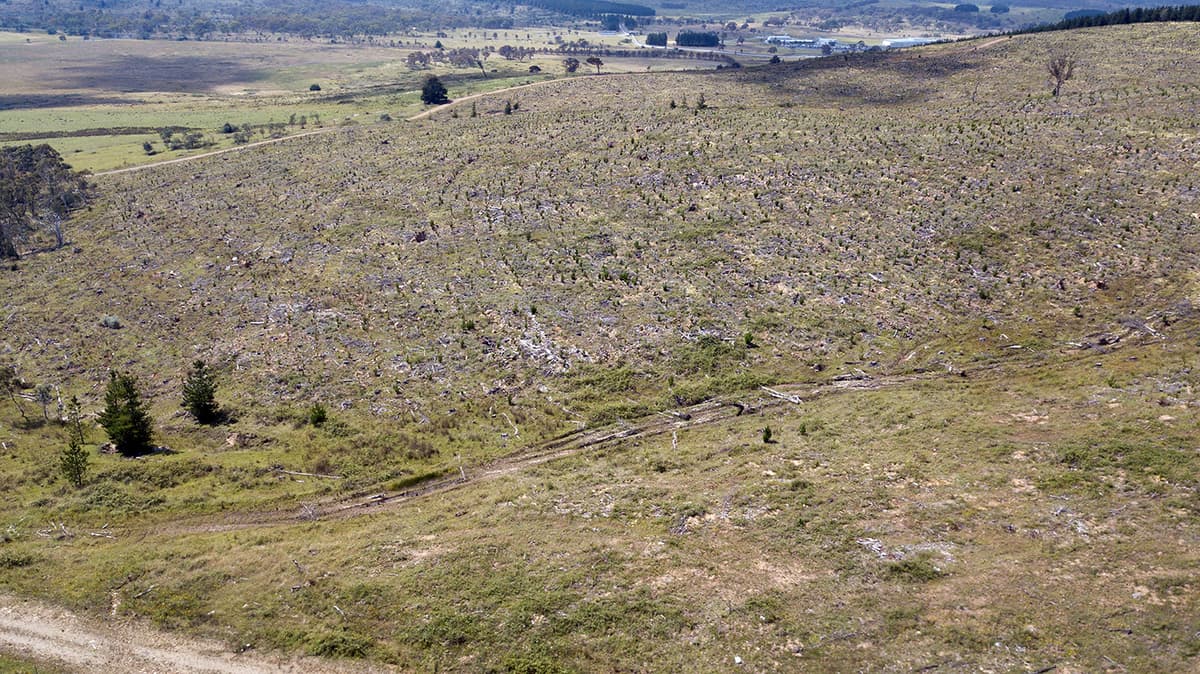
Land clearing is considered an emission because trees help reduce CO2 levels.
Crucially, in 2005, there was a huge amount of land clearing – especially in Queensland.
But no other country needs to use land clearing to calculate its emissions falls (except for Russia).
Back when the Kyoto agreement was being negotiated, the Howard environment minister, Robert Hill, made sure that Australia would be able to include land clearing emissions in its 1990 base year.
This was because in 1990, we did a lot of land clearing:
This is known as the “Australia clause” and was agreed upon (back in 1998, The Australia Institute wrote on this) and even still, Howard didn’t sign the Kyoto agreement.
When the Rudd government came in, they did sign the agreement, but kept the “Australia clause”, and so have every single government since.
They do this because counting land clearing in 1990 and then 2005 makes it oh so much easier to say we have reduced emissions:
Take away land clearing and actual emissions are only down 3% compared to 2005 levels.