The revelation that the Forestry Corporation of NSW (FCNSW) is proposing to log a cloud forest in southern NSW teeming with threatened species is another reminder of the spiralling decline of the native forest logging industry.
Fri 23 Jan 2026 01.00
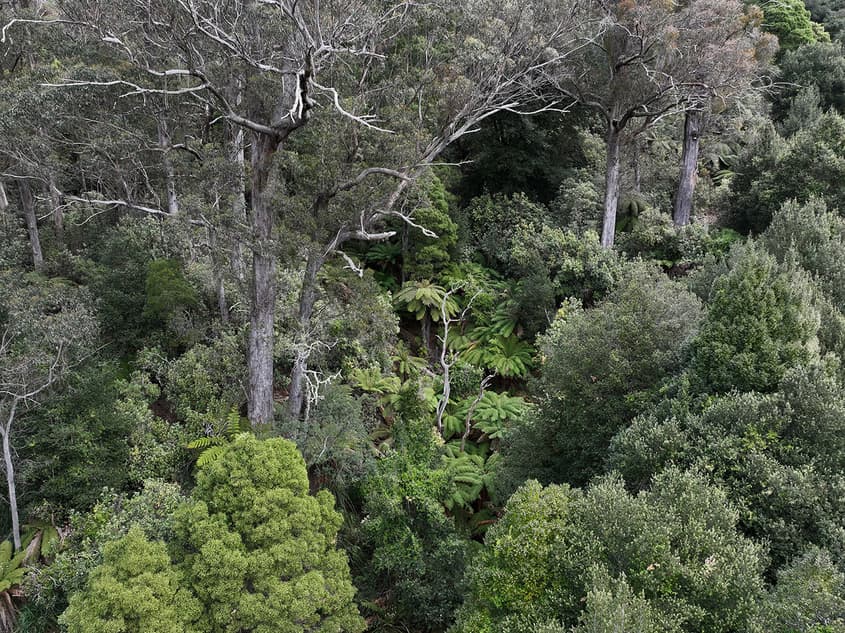
Photo: Area to be logged in Glenbog, credit: Wilderness Australia


The revelation that the Forestry Corporation of NSW (FCNSW) is proposing to log a cloud forest in southern NSW teeming with threatened species is another reminder of the spiralling decline of the native forest logging industry.
Logging companies as well as FCNSW are now reporting significant financial losses. Species that were not even threatened 25 years ago are now listed as endangered. And at the same time past logging has demonstrably increased the vulnerability of forests to climate risks and increased the severity of fires.
I’ve been close to that reported citizen science work in Glenbog State Forest and it has taken me back to the fundamentals. Old fashioned, sometimes arduous field investigation makes the reality on the ground clear. FCNSW found 4 glider den trees in a 500 hectare area. We found 102 den trees and if we had not done so their occupants would have been harmed or killed in logging operations.
For many years FCNSW has saved costs on the preparation for logging operations and instead accepted a fine for an occasionally detected breach of the State harvesting regulations protecting threatened species. They are effectively paid from the public purse.
The Glenbog experience is a reminder that the practice will continue except when it is interrupted by community initiatives and citizen science, or occasionally the Environment Protection Authority (EPA).
The Federal Government has recently promised (in association with the recent EPBC Act reform) to introduce national environmental standards for threatened species protection in State Forests which have until now been exempt from federal provisions.
It remains to be seen whether useful national standards will be developed. To improve protections on the ground, standards would need to ensure areas of core habitat for protected species and the connections between them are located and protected.
They won’t mean much without diligent enforcement, however.
The Glenbog experience demonstrates that at least in many locations diligent application of existing laws makes native forest logging impossible.
The timber industry of course has other ideas. Working under Federal Government auspice it has produced a baffling new policy document called the Australian Timber Fibre Strategy. It acknowledges that 90% of existing supply comes from plantations but nevertheless spends the majority of its time proposing new and exceptionally destructive ways to extend the life of the native forest logging sector.
Completely ignoring a massive body of forest science literature, it fails to acknowledge the high value of forest environmental services like water quality and retention, tourism, and in particular their ability, if left unlogged, to store vast amounts of carbon. Native forests could play an even more significant role in the achievement of national greenhouse gas reduction targets.
For practical purposes, the Strategy makes the assumption that native forests can continue to be plundered for chips and wood for burning yet somehow always store and sequester carbon.
On that same assumption, large areas of Finnish and Canadian forests have been transformed from large carbon sinks into sources of carbon pollution, driven by over extraction and wildfires. The 2019/20 fires in Australia provided a taste of this phenomenon.
The Timber Fibre Strategy suggests that governments should pay for thinning, including in national parks, by awarding carbon credits and removing current regulatory barriers to burning wood instead of coal. In fact, the use of native forest wood for energy production – transmitting carbon straight from the stump into the atmosphere – is a process that inevitably trashes biodiversity and then produces more greenhouse gas at the chimney stack than burning coal. It is not now permitted under Commonwealth regulation and until recently contrary to Labor policy.
Western Australia, Victoria and New Zealand have acted on the understanding that continuing support for the native forest logging industry is not reasonable. It surely makes practical sense to stop any further destruction of native forest and for Government to arrange a fair industry restructure package that would complete the transition to a wholly plantation-based industry in the rest of Eastern Australia. This is not a difficult challenge given 91% of Australia’s wood requirements are already supplied by plantations and most of the trees felled in native forests are turned into pallets or woodchips.
Meanwhile, more boots in the bush will continue to make everyday life hard for an industry contributing so much to the twin crises of species extinction and global warming.
Bob Debus was a member of the NSW Parliament from 1981 – 1988 and 1995 – 2007, during which time he served as Attorney General, Minister for Emergency Services and became the State’s longest serving Environment Minister.
Bob is currently the Chair of Wilderness Australia and sits on the Board of several other prominent organisations.
Advertisement

Amidst the high drama of parliament this past month, a quiet but historic moment is unfolding largely unnoticed. After two decades of campaigning, several years of treaty negotiations, and a few more drafting laws, legislation has finally been tabled for Australia to join the new High Seas Treaty. This is arguably the most significant global agreement on nature protection of our generation.

The Australian Government lets foreign owned gas companies export vast amounts of gas above and beyond what they need to fulfil their export contracts, while leaving Australians short.
Environmentalists have accused the Albanese Government of making a “mockery” of Australia’s new nature laws, saying they’re “gobsmacked” by its decision to greenlight the destruction of threatened bird habitat in the Northern Territory.