The OECD’s annual survey of Australia’s economy this week bluntly noted what most Australians understand very clearly: housing is expensive and in short supply. The report highlighted issues with planning that restrict density in urban areas, but importantly it also noted the need to reform Australia’s tax system to stop favouring investors.

Fri 23 Jan 2026 01.00
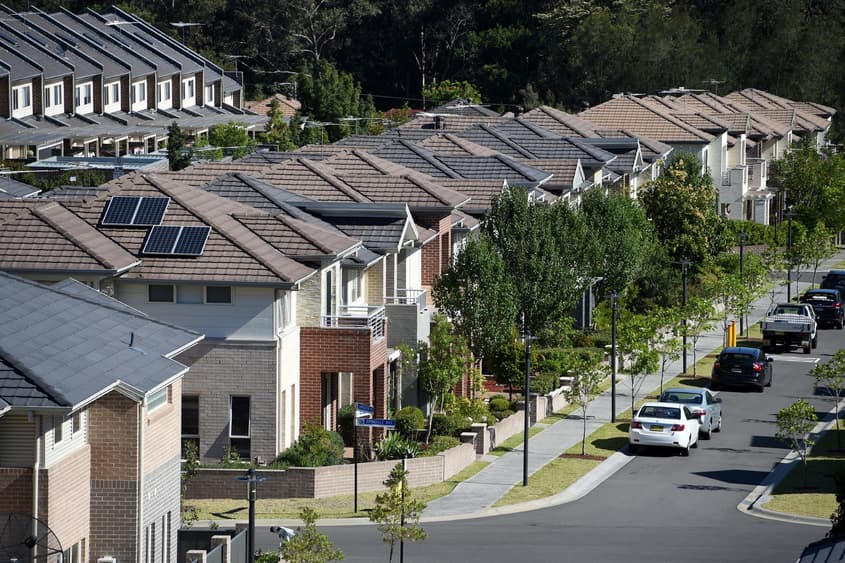
Photo: AAP Image/Dan Himbrechts


The OECD’s annual survey of Australia’s economy this week bluntly noted what most Australians understand very clearly: housing is expensive and in short supply. The report highlighted issues with planning that restrict density in urban areas, but importantly it also noted the need to reform Australia’s tax system to stop favouring investors.
Housing affordability has for well over two decades now been a critical issue for Australians. The OECD annual survey of Australia revealed that not only does the data support people’s feelings that housing is much less affordable than in the past, but that what is happening here is unique.
Since 1996, the ratio of house prices to annual income has risen around 97%, compared to 20% in the United States and 17% across the entire OECD.
Canada, which has a similar land size and population to Australia compared to European nations like Germany, the UK and Italy, has also seen a strong price rises, but these mostly came in the 2010s off the back of very low interest rates after the GFC and also a low Canadian dollar which made it attractive to buyers from the USA:
The OECD notes that one thing that is particularly exceptional with Australia’s housing market is that most of our dwellings are detached houses.
Seventy one percent of Australia’s housing stock is made up of detached houses, compared to 40% across the whole OECD. This has led to the great suburban sprawl in Australia’s capital cities.
As such, the OECD suggests there needs to be “land-use policy reforms, such as removing overly tight building height restrictions or minimum lot size requirements, are needed to achieve more medium- and high-density housing”. It notes that “reforms of this sort have improved affordability in cities such as Aukland and Tokyo”.
But while increased housing density is one approach, the OECD notes the problem is much deeper.
The OECD finds that Australia is a particularly poor supplier of social and public housing. This is an issue The Australia Institute has long noted. Earlier this week the Bureau of Statistic released the latest building activity figures. They showed that for nearly 25 years the number of public-sector residential buildings being built per 100,000 residents has been below 20, compared to well over 100 in the 1950-1980s:
Little wonder then the OECD has found that Australia has among the lowest share do social housing available for rent in the OECD:
Just 3% of the total dwellings available for rent in Australia are social housing. By contrast they make up 16% in the UK, and 7% across the entire OECD.
However, while higher density and more public housing are key issues, the OECD is not afraid to note the major role Australia’s tax system is playing in decreasing affordability.
The OECD notes in a section titled “the tax system and subsidies boost housing demand” that “home ownership as an investor is further supported by a 50% capital gains tax reduction” as well as “mortgage interest deductibility for investment properties and the provision for ‘negative gearing’ ”.
The OECD recommends “removing some of the favourable tax treatment of residential property ownership, including capital gains tax concessions and negative gearing, would help to cool demand and could help to mitigate upward pressure on house prices.”
This echoes Australian Institute research.
The CGT discount and negative gearing costs the government around $12.3bn a year – $7.2bn of which goes to the richest 10% of Australians:
In our submission to the Senate inquiry on the Operation of the Capital Gains Tax Discount, we noted that “that the 50% CGT discount has introduced a distortion to the tax system that favours the wealthy and increases inequality. It acts as an incentive for housing investors that allows them to outbid prospective owner-occupiers and placed home ownership outside the reach of many.”
The OECD agrees, and the finding it its annual survey should add weight to those demanding a change to how housing is treated in Australia.
Advertisement

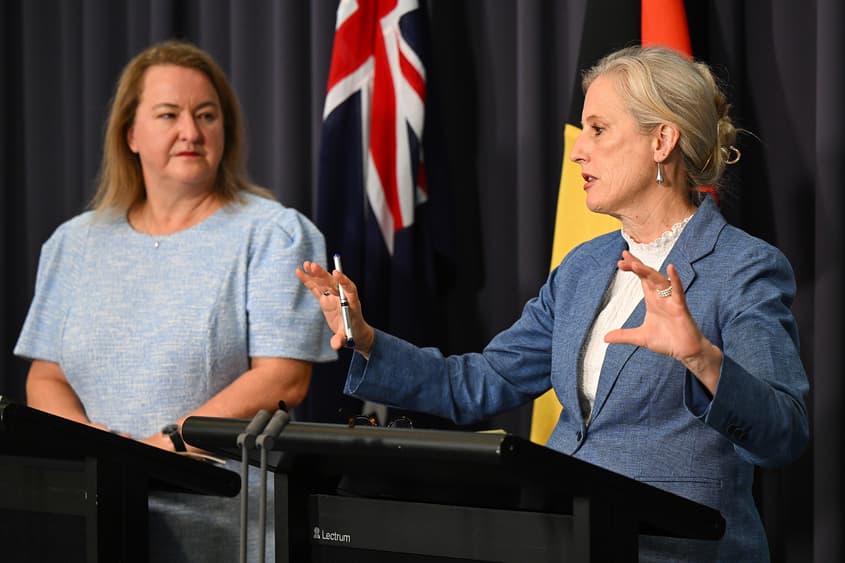
Earlier this week the Finance Minister and Minister for Women, Senator Katy Gallagher released the latest data of the gender pay gap by the Workplace Gender Equality Agency.
The health of the economy was revealed this week with the release of economic growth figures showing the economy grew at a better-than-expected rate of 2.6% for 2025. This compared to the forecast of just 2.2%.
The Workplace Gender Equality Agency (WGEA) has released their gender pay gap data today and while we took a tiny step closer to pay equity, men are still almost twice as likely to be in the highest earning quartile – earning more than $220,000.