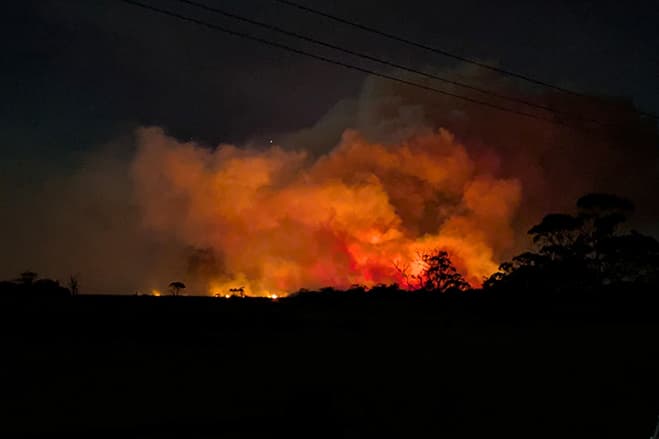
Last year’s changes to the EPBC Act won’t do nearly enough to address the damage fossil fuels are doing to our environment.

Tue 10 Feb 2026 01.00
Photo: AAP Image/Lukas Coch


A great deal of fanfare surrounded the passage of the Albanese Government’s long-awaited environmental reforms in November last year. But while environmental groups celebrated the fact that new coal and gas projects cannot be fast-tracked for approval, it seems unlikely that the new laws will actually lead to an overall decrease in the approval rate of fossil fuel projects.
Our research examines the effectiveness of environmental laws in Australia, and the main threats to biodiversity conservation, including things like climate change and habitat loss.
Australians now seem to understand the link between continued fossil fuel consumption and climate change – perhaps helped by the severe floods and fires that have repeatedly hammered our continent over the last several years.
Perhaps not so well appreciated is the negative impact that fossil fuel production and consumption have on biodiversity. But the research is just as clear. Every fossil fuel project leads to higher temperatures, and higher temperatures lead to increased extinction risk.
Climate change can lead to extinction due to a myriad of reasons – individuals may die during extreme events, breeding success may be reduced, or suitable habitat might disappear.
For example, several frog species (including the aptly named “neglected frog”) live on forest-clad mountains in the Wet Tropics of Far North Queensland. As the temperature gets warmer, they simply have no higher mountain to climb. If they did manage to move to another location, they might encounter an unfamiliar predator, or have to compete with another species of frog.
Similarly, if a plant has one specific pollinator, which shifted its range because of warmer temperatures, that plant species would be negatively impacted due to the lack of pollination.
Of course, climate change and associated hotter temperatures are not the only factor affecting biodiversity.
Our continued destruction of the natural world mean that species are also suffering from habitat loss (to produce food and build infrastructure), direct exploitation (overfishing, logging and hunting) and invasive species (which may spread more easily in warmer temperatures).
Sadly, these additional threats impact a species’ ability to adapt to climate change. And let’s not forgot about the extreme climate events that are becoming more frequent; recent research has showed that extreme heat has contributed to a decline in abundance of tropical birds by about a third since the 1950s.
Although we seem to think that these impacts will be felt by “future generations”, there is no doubt that the biodiversity crisis is here, right now.
In Australia, half of coral cover has been lost from the Great Barrier Reef, and the Bramble Cay melomys (Melomys rubicola) is the first documented mammalian extinction event attributable to anthropogenic climate change. An Australian study shows that 19 of our ecosystems have collapsed or are collapsing across at least part of their distribution.
Even protected areas (such as national parks), supposedly the pinnacle of biodiversity protection and some of our most-loved places, are not safe from the grips of the fossil fuel industry.
A new report released last week showed that 7,000 protected areas around the globe are threatened by oil and gas production and exploration licences. In fact, Australia had the highest overlap of any country, with licences overlapping, at least in part, with 515 protected areas.
Surely, at the very least, protected areas should be a no-go zone for fossil fuels?
Australia’s EPBC Act is our national biodiversity conservation law that regulates fossil fuel project approval. After much debate, the Government finally reformed the law in November 2025, following years of research documenting its failure and a scathing independent review that the current act was not fit for purpose.
Initially, the Government seemed to have great ambition, terming their plan the ‘nature positive’ plan. However, strong business and industry input soon watered down that ambition, with the term ‘nature positive’ noticeably absent from later discussions.
It now remains to be seen whether three years of reform work will lead to any improved outcomes for biodiversity. In terms of fossil fuel projects, there is no requirement for decision-makers to consider the effect of estimated greenhouse gas emissions of proposed projects on biodiversity, nor is there a requirement to disclose ‘scope 3’ emissions, such as fossil fuel burning overseas.
An oft-cited argument is that we have another law (the “Safeguard Mechanism”) to help bring down emissions from large polluters, such as those in the oil and gas industry. However, the Safeguard Mechanism does not regulate project approval (as the EPBC Act does), it does not include consideration of scope 3 emissions (often the largest source of emissions) and importantly, it allows emissions to be “offset”. Some of the carbon offsets in the scheme have led to very low levels of carbon sequestration; not enough to offset the carbon emissions released in the first place.
Urgent actions are needed to limit the impact of climate change on biodiversity. We must quickly minimise fossil fuel usage and move to cleaner sources of energy. Renewable energy infrastructure should be carefully planned to reduce threatened species habitat loss (which is possible) and the impacts of wind turbines on birds and bats needs to be considered too.
Otherwise, the flippant approval of fossil fuel projects will continue to erode biodiversity at an alarming rate.
Dr Hannah Thomas is a postdoctoral research fellow at Griffith University and an Early Career Leader at the Biodiversity Council.
Advertisement

Environment Minister Murray Watt is facing renewed pressure to intervene and protect Tasmania’s heritage-listed Macquarie Harbour amid deepening public opposition to the state’s salmon farming industry.
The gas export industry has been free riding off Australians for decades.
Right now, right across the country, communities are being forced to come to terms with the rapidly escalating frequency, intensity and cost of climate disasters.