It may be fifty shades of boring to most of us, but by all rights tax reform should be the water-cooler topic du jour. Despite the many damning reports about our ongoing cost-of-living crisis, Oxfam found that in Australia, billionaires have increased their wealth by 70.5% or $120 billion since 2020.

Thu 12 Feb 2026 01.00
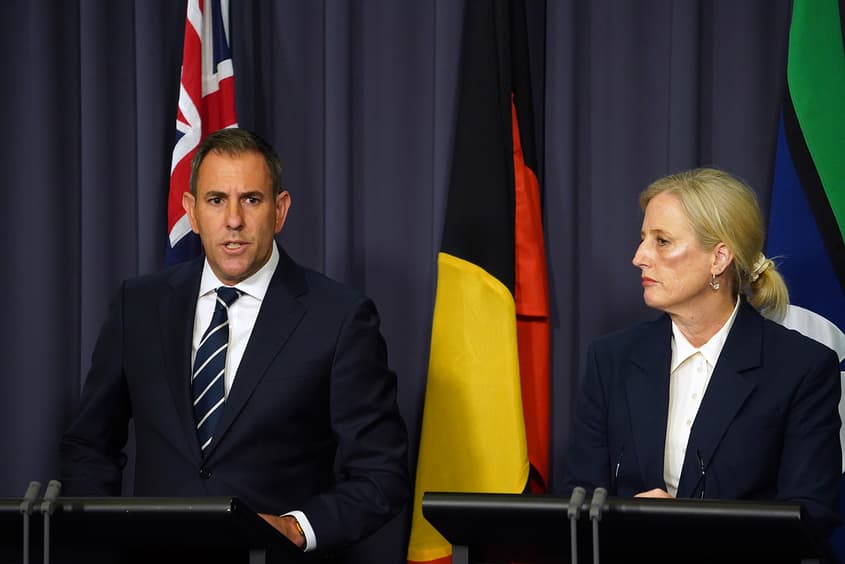
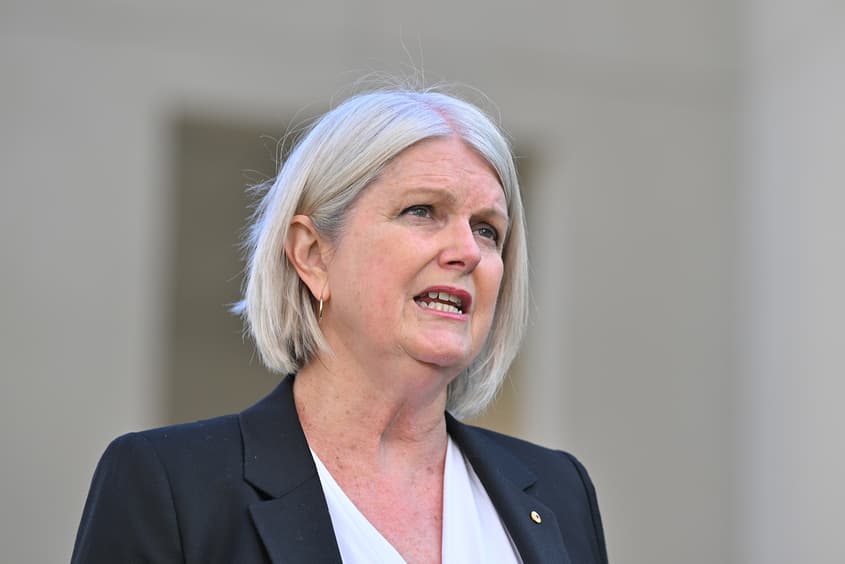
Photo: AAP Image/Dominic Giannini


It may be fifty shades of boring to most of us, but by all rights tax reform should be the water-cooler topic du jour.
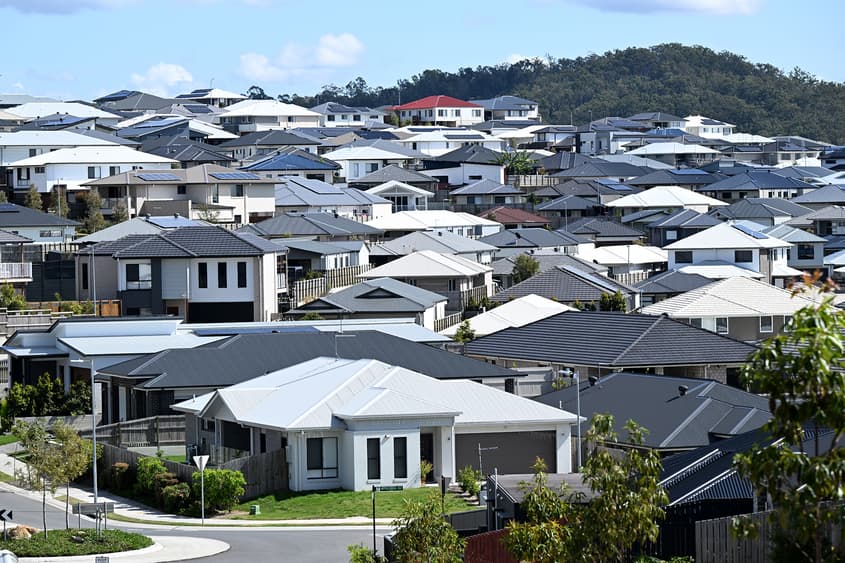
Despite the many damning reports about our ongoing cost-of-living crisis, Oxfam found that in Australia, billionaires have increased their wealth by 70.5% or $120 billion since 2020. Most Australians are on a very different trajectory. The simple aspiration to own a place to live is now beyond the reach of the next generation, with median house prices soaring to at least eight times the average income.
Three quarters of Australians support a wealth tax, but amazingly, it’s still political suicide – even on the left. In the US, Elizabeth Warren and Bernie Sanders floated super wealth taxes and the ‘too liberal’ Presidential candidates sank in rapid succession. When the Australian Greens proposed a ‘Robin Hood tax’ on billionaires in 2024 it was dismissed as a ‘fairytale policy’, and even Labor’s Jim Chalmers laughed it off as a ‘bid for attention’.
If people who are struggling to put food on the table aren’t voting for a policy that taxes super yacht owners more, then the problem lies with the sales pitch, not the policy.
Tax is arguably the most powerful lever we have to ensure we can still call ourselves an egalitarian meritocracy and keep a straight face. Labor now has an overwhelming post-election mandate and an oft-vaunted vision to deliver a fairer future for all. If this isn’t the time for pioneering brave policy ideas, when is?
Despite being one of the richest countries in the OECD, Australia is one of its lowest taxing countries, and our poverty level is higher than the average.
Where we once accepted higher marginal tax rates on the highest incomes as standard, the new normal – more than half as little – has become almost impossible to budge. Even Chalmers’ modest proposal to decrease the tax concessions for superannuation funds over $3 million was met with a wave of fury from the press. ‘We’ll tax you til you’re poor’ read the headline on nine news com au. The ‘you’ in question is of course not the average reader of this headline – 99.5% of Australians do not have anything like that amount in their superannuation fund.
When it’s impossible to even reduce a tax break, let alone increase a levy, it is a truly Sisyphean task for any politician to take on.
Tax is not only boring – it’s also baffling. In bandying about phrases like ‘flagship financial security index’ and ‘illicit financial flows vulnerability tracker’ even reformers like the laudable Tax Justice Network struggle to engage the average punter in important discourse that affects their daily lives.
There’s a more sinister side to this bafflement.
Language can be used to deliberately obscure; the ‘econobabble’ Richard Denniss of the Australia Institute describes – internal lingo used outside of the system in order to consciously flummox and ward off interaction. If one lobs in a ‘macroprudential liquidity coverage ratio’ or ‘countercyclical equity capital buffers’ into the chat, one can quickly shut down any would-be meddlers in economic orthodoxies. Economics should be for everyone, as the economist Ha-Joon Chang points out – it’s just that economists have been very successful at making out that it’s all far too difficult for the average citizen to grasp.
In the absence of widespread confidence in what we’re talking about, whoever can build the most persuasive top-line narrative wins the debate. Historically, the right has managed to completely dominate the ‘good with money’ space. Just like the kids’ mnemonic for unscrewing something, the economic idea of ‘lefty loosy, righty tighty’ is deeply embedded in our consciousness. The left is chaotic and idealistic and will give all the money away; a bunch of bleeding hearts who will kill business and tank the economy. The right is a safe pair of grown-up hands and makes tough choices; they wear suits, support the conditions for the creation of wealth, and will bring more money that will eventually, ahem, trickle down.
Some commentators argue that even the existence of billionaires is a colossal failure of policy.
We tolerate wealth of this nature, in part, because we can’t really compute it. Our brains are notoriously ill-equipped to grasp huge numbers, and we can’t grasp the magnitude of difference between a not-that-rich millionaire celebrity and a mind-bogglingly rich billionaire. Jeff Bezos’ seemingly extravagant $47 million USD wedding only represented 0.02% of his net worth. That would be the equivalent of an average Australian (based on an average net worth of $1.46 million) spending a measly $292 on their wedding.
These numbers are unfathomable to most mortals, so we’re not as nearly as furious as we might be by the regulatory failures that have normalised this. And as noble as any philanthropic (and tax-deductible) gestures may seem, even endowments of millions are still a drop in the ocean compared to the tax they are avoiding.
The standard response to any gentle proposition regarding tax reform, or even any attempt to enforce basic tax compliance is: if you raise taxes on capital, the country’s fortune makers will go away and take their money elsewhere. Whilst there is truth in the idea that loopholes can be exploited if there isn’t international cooperation, the idea that all the wealth creators will up and leave is demonstrably untrue. The LSE Inequalities lab in the UK found that most of the super-rich folk they interviewed had absolutely no desire to leave their homes and family networks for tax havens or lower tax nations, and were concerned about the stigma and upheaval involved in doing so.
The more dire the situation has become, the more we’ve lost confidence in our leaders – even the ones who are trying to help overturn the paradigms. Our trust in institutions has been calculatedly eroded – thanks to some powerful public messaging and scapegoating, every public servant, academic and politician was chucked together in the same villainous, amorphous package of ‘elites’ who had trashed the economy, sent jobs offshore and caused a crashing decline in living standards. Why trust the government to take your money and redistribute it?
What we’re really lacking is some sort of clear, accessible vision about what tax is and should (and could) be.
Inequality is a moral issue, and too often economic debates are starved of the ethical ideas and language that should underpin them. What, and how much we tax, matters. Economic theories reflect what we value and what we regulate – they are not some impossible-to-govern market force that we must submit to. A staggering 40% of First Nations people in Australia survive without two or more essentials (housing, clean water or food) required for an adequate standard of living. We tolerate this, just as we tolerate the super-yachts in Darling Harbour.
As with the cultural avant-garde, sometimes innovative leaders must venture ahead and implement something people don’t yet even know they want or need.
The Welsh government recently reformed the woefully regressive council tax, even in the face of focus groups that didn’t fully understand the issues or call for their implementation. Housing is much harder to hide than income and is a good proxy for it – commentators like Alan Kohler have called to at the very least limit negative gearing to new-builds and cut capital gains discounts to 25%.
But will Albanese and Chalmers be brave enough to make even larger paradigmatic changes, even if no one asks them to?
Abi Stephenson is a writer (Guardian, Aeon, The Monthly, ABR) and former producer of the RSA’s events and Webby Award-winning ideas animations.
This is an edited extract of her full essay, Let’s talk about tax, baby: How economic reform can change the world, published in Griffith Review 91: On the Money.
Griffith Review is a quarterly literary journal. Each edition explores a different theme, bringing together long-form critical and analytical non-fiction and creative writing. Available in all good bookshops, or you can read online or subscribe here.
Advertisement
In life it is nice to have things you can count on, and every time this year you can absolutely be guaranteed to hear business groups and their friendly economists screaming in fear that the ACTU and the Labor Government’s recommendation for an increase in the minimum wage will cause a recession.

Australia’s peak council for community services ACOSS has joined the torrent of support including the Greens and independent members of parliament for a 25% levy on gas exports, originally proposed by the ACTU.
Combined with the 50 basis points rise in February and March in less than 2 months households are paying the equivalent of a 90 basis point rise in interest rates.