Energy security is national security. And for all the posturing from conservatives about “seeing Mad Max levels around the country right now” (whatever that means, the LNP’s Phil Thompson), they did this.

Mon 30 Mar 2026 02.00
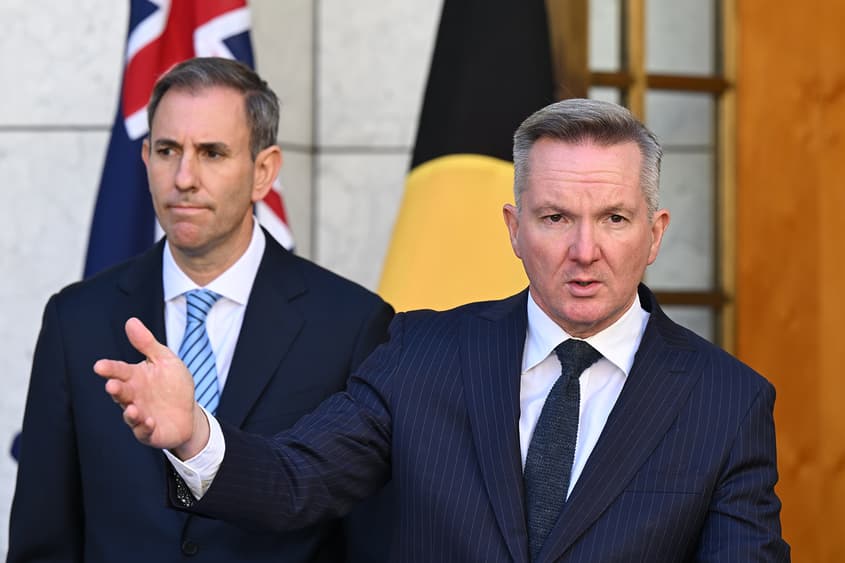
Photo: AAP Image/Lukas Coch


Energy security is national security. And for all the posturing from conservatives about “seeing Mad Max levels around the country right now” (whatever that means, the LNP’s Phil Thompson), they did this.
It was the right that derailed Australia’s energy transition, that prioritised fossil fuels above the nation, that fought reality and convinced a slew of Australians it was common sense to put their faith in a finite resource that was not only contributing to killing the planet, but causing harm to millions in the fights over who controlled it.
It is a fantasy to think that any nation that does not control its energy supply has security. Australia could have been well on its way to securing its energy, if John Howard and his ilk hadn’t had a tantrum over a changing world, and succumbed to their desires to keep everything the same.
The Morrison government gave instant tax write-offs to encourage the take-up of big dumb utes, while fighting against vehicle emission standards and delaying the take-up of EVs.
The agriculture industry was not encouraged to move away from its reliance on diesel. A general ennui swept middle Australia, lulled by the right into fighting for its own interests.
Nor is Labor blameless. Instead of fighting for science and for the future, it took defeats over the carbon price and emissions trading scheme and assumed the only way to beat them was to join them.
Neither party has seen fit to unhook Australia from US foreign policy, and Anthony Albanese was one of the first leaders in the world to throw his support behind the American and Israeli decision to bomb Iran, despite not knowing of it in advance, its justification, its legality or even its objectives.
Being directly impacted by US foreign policy – which has killed almost 1500 civilians in Iran already, including more than 200 children – is not something most Australians have had to think about. That’s a luxury. For those living in Australia with families and loved ones who have faced death, injury, disease, displacement and slavery because of either direct decisions of the United States, or who it supports, the disconnect has added to never-ending grief.
Israel is now openly using its actions in Gaza as a threat against any resistance to its plans to illegally seize more land in southern Lebanon, a war crime being sanitised by most Western media as a “buffer or security zone”.
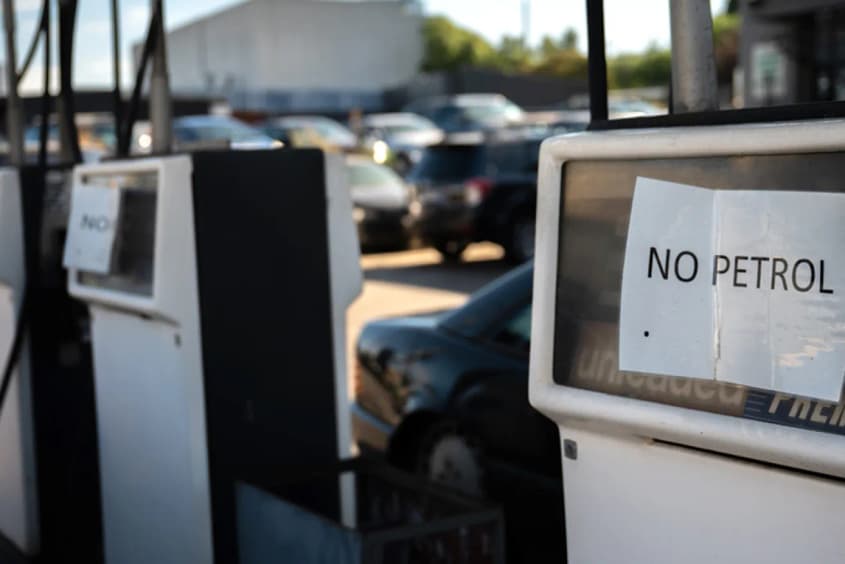
But eventually roosters come home. They have in Australia through an energy and fuel affordability crisis (soon to be a supply crisis) that will impact more than just transport.
Plastic is made from petrol. That’s a lot of your fast fashion and cheap home goods suddenly looking less cheap.
Construction uses PVC pipes, which are made from oil. With giant projects like the Olympics going on, for which facilities have to be built, what is available will balloon in prices they can pay. But your average home build? Forget about it.
Synthetic fertiliser relies on fossil fuels. While there are those who point to Sri Lanka’s attempts to go organic as creating a food crisis, there has been no major focus on solving how we might unhook a major part of our food chain from fossil fuels.
Currently, 80 per cent of the world’s oil is still flowing, so these products will be available – to the highest bidder. Priorities will be decided and what is and isn’t an “essential” industry will be made very clear. Mining companies are going to be just fine, as will major agricultural and transport players.
As with everything, it will be the poor – working or not – who will have to pay the highest prices, who will be asked to make the biggest sacrifices. It should never have had to come to this, but this is the inevitable outcome of 30 years of policies designed to keep us living in the past.
There is no easy fix to any of this. Our emergency fuel stockpile may no longer be in the US but it is still virtually non-existent. We married ourselves to fossil fuels, dismissed as lefties the environmentalists and researchers who told us how critical energy sovereignty was to national security, while also leaving ourselves completely exposed to this exact kind of thing. And why? Because of the fallacy that America would save us?
Australia is no closer to a serious conversation about energy security, even with this latest crisis.
The opposition won’t push the government on it, because that would reveal its major role as a wrecker for politics’ sake in the past three decades. Angus Taylor can’t even spearhead the “how will you get fuel to Australians?” conversation, because of his own previous culpability in not only derailing the energy transition, but because he decided to store Australia’s fuel reserves in Texas and Louisiana to help strengthen our relationship with the US.
Labor, again doing the least possible, is overwhelmed in responding to what looks like coming down the immediate pipeline, and is still nowhere near reckoning with what the nation needs to do. Not that anything could be done quickly now, even if there was the political will. This is going to take decades to transition and, in the mean time, we will remain vulnerable to whatever global unrest America and its allies inflict on the globe.
What we are being prepared for, is budget cuts – to social services and institutions, like Legal Aid and the NDIS. Consent is being manufactured to cut the projected growth funding of crucial services, while we’re told it isn’t the time to cut fossil fuel subsidies, like the fuel tax credit scheme that costs about $10 billion a year in foregone revenue. Fossil fuel subsidies outstrip the cost of the NDIS, but there are suggestions only of protecting one; the other, which gives independence and agency to people so often denied it, is considered “wasteful”.
And while it has public traction as one solution to our budget revenue problems, the 25 per cent tax on gas exports is still not embraced by either of the “major” parties, even as they prepare us for rougher economic times.
The last party to come on board that particular train will be the biggest loser. There are some who know this – Andrew Hastie, perhaps the best-placed Liberal to gauge popular positions, being one of them.
He has deliberately left himself open to supporting the tax, just as he has been the most consistent Liberal MP on Donald Trump. The rest of his party – and indeed the populist queen herself, Pauline Hanson – has found it difficult to openly criticise Trump (let alone the Labor government, which ties itself ever closer to his administration). But Hastie has been a constant critic.
“President Trump thought he could go in and win the war in a week. And right now, Iran has the world economy held to ransom, and people like Anna are suffering as a consequence,” he told Sydney radio 2GB on Thursday.
“I’m not going to send young Australians to die in a conflict that we don’t know an end state to, and there’s no clear strategic objective.”
That same day, The Guardian reported Hastie’s views on the gas tax:
“I think a lot of people, Australians, feel like the multinationals don’t have a social licence, that they’ve had a really good run of our wealth here, and so I’m sympathetic to that point of view. I just know how important those industries are to Australia, so I’d want to get it right. So, I guess I’m open-minded about those questions.”
He’s open-minded to those questions because he can see which way the wind is blowing.
It should not take an inevitable crisis to see what experts have warned about for decades, just as it should not take the deaths of thousands of civilians for leaders to rethink unquestionable loyalties to declining empires.
The question becomes then, how do our leaders respond now that the existential is all too real. And who will be the last to see what is clear to so many of us, living it.
Amy Remeikis is a contributing editor for The New Daily and chief political analyst for The Australia Institute
This article was first published on The New Daily.
Advertisement
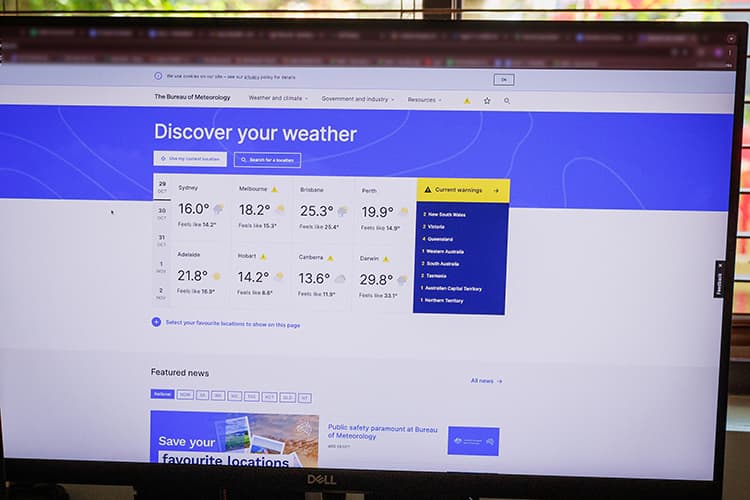
The consulting firm behind the Bureau of Meteorology’s (BoM) heavily criticised website has been awarded another multi-million-dollar government contract to build a new climate platform.
The easiest way to understand the structural shift taking place in Australian politics is to understand that you can now win a landslide majority of seats in parliament even when your primary vote declines.
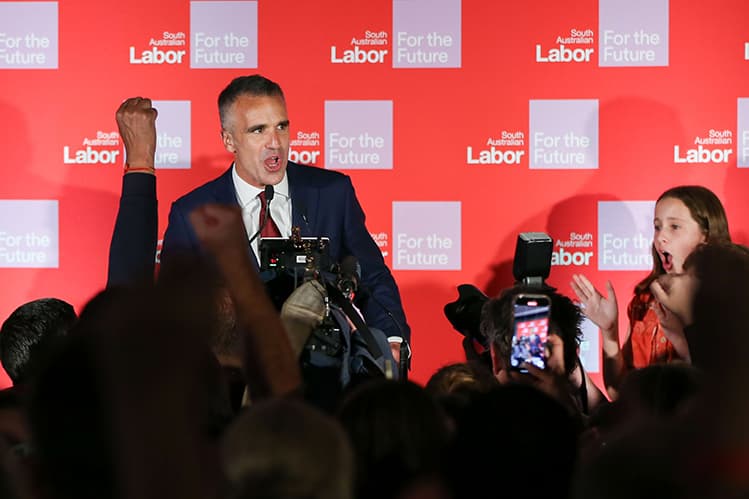
On Saturday, South Australians voted decisively to re-elect the first-term Malinauskas Labor Government. While we don’t know exactly how the 47 lower house seats will fall, Labor will have a super-majority having won about 35 seats.