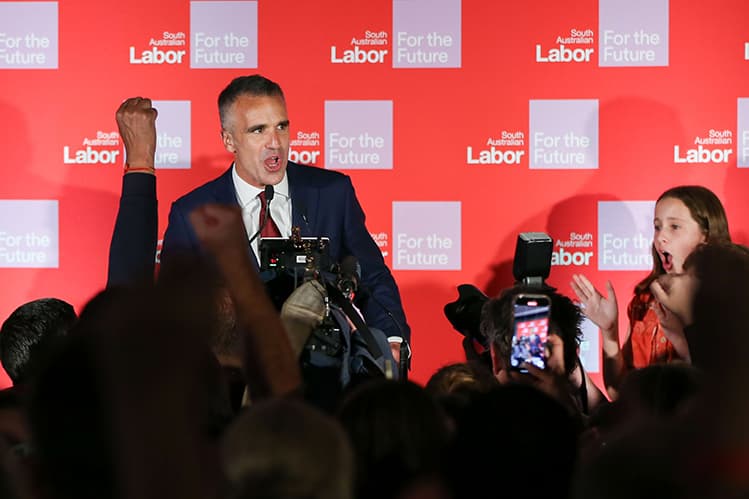
Australia’s “two-party system” looks uncertain, and in South Australia it would be fair to say it has ceased to exist altogether with the far-right minor party, One Nation, winning more votes and about as many seats as the Liberal Opposition.

Tue 31 Mar 2026 00.00
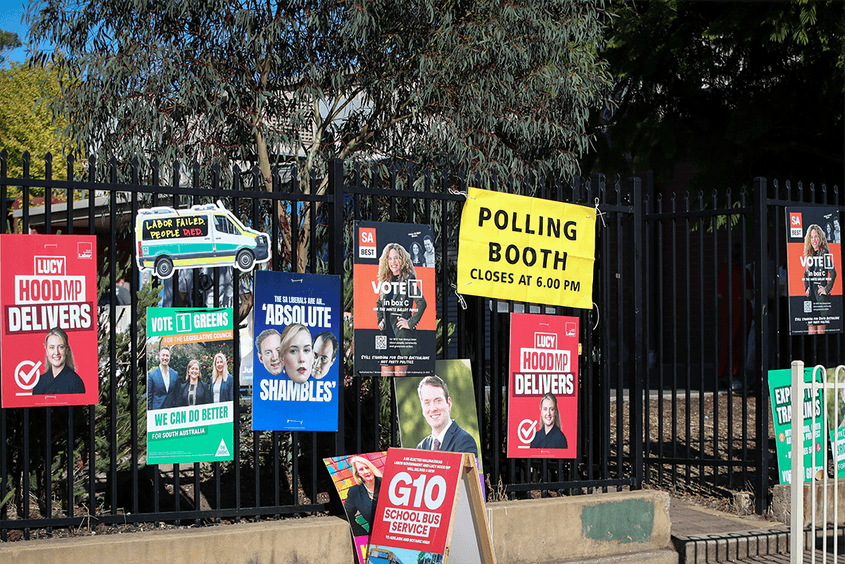
Photo: AAP Image/Matt Turner


Australia’s “two-party system” looks uncertain, and in South Australia it would be fair to say it has ceased to exist altogether with the far-right minor party, One Nation, winning more votes and about as many seats as the Liberal Opposition.
What does this mean for Australia’s Westminster democracy, where politics is a contest between the government of the day and the “alternative government” in the form of the opposition?
Fortunately, the major parties are much less important for Westminster democracy than the major parties would have you believe.
In Westminster democracies like Australia and the United Kingdom, the majority party or coalition in the Parliament supplies the Government: that is, the prime minister (or premier at the state level) and ministers who make up the executive.
The second largest party or coalition supplies “His Majesty’s Loyal Opposition”, so named to emphasise that they are opposed to the current government, not to the system of government. The Opposition is “the” alternative government; while not in power they receive extra resources and privileges to challenge the government.
It is tempting then to conclude that the Westminster system of government is a two-party system.
That is certainly how politicians speak. Labor Minister Don Farrell said the Government’s changes to donation laws were to uphold “the centrality of the Westminster, two-party system” (in other words, protect against independent and minor party upstarts).
In its first term, the Albanese Government refused to act on truth in political advertising laws, religious liberty and religious discrimination protections, public hearings for the National Anti-Corruption, nature positive legislation or a modest increase in the number of territory senators – all because they failed to win the support of the Opposition.
In fact, there is nothing that requires that Westminster democracy be dominated by two parties. A coalition can supply the Government or the Opposition.
The Westminster system evolved in the Parliament of the United Kingdom at a time when parties were more like loose factions than the organised, mass-member movements typical of the 20th Century.
Even in Australia, Westminster government pre-dates the modern party system and Federation itself. In the 19th Century, Tasmania had 18 “independent” premiers in a row, leading a loose alliance of parliamentarians, facing opposition leaders leading their own loose alliance.
And in Westminster itself, where it all began, Parliament has been multi-polar at least since the Labour Party eclipsed, but never fully replaced, the Liberal Party in 1923. Today, the 116 Conservative MPs in the UK’s official Opposition are outnumbered by what Australians would call the “crossbench” of Liberal Democrats, Scottish Nationalists, Reform, Green, independent and other minor party MPs. The Scottish, Welsh and Northern Irish parliaments are even “messier” from a two-party point of view.
Even when politicians imagine they are in a two-party system, voters have a way of upsetting the applecart. At Federation in 1901, Australia’s two major parties of Protectionists and Free Traders imagined that they would alternate in government depending on which of their mutually incompatible ideologies was more popular with voters.
There was an upstart party, the socialist Labor Party, but its strategy was to sit on the crossbench and extract concessions from whomever formed government.
The Protectionists and Free Traders did not survive the decade. The Labor Party was so popular that it quickly became a party of government. The two non-Labor parties merged to form the first iteration of the Liberal Party.
By the 1920s, the Country Party (now the National Party) was in play.
At best, you could say that Australia is a “two-and-a-half” party system and, as the Nationals showed by quitting the Coalition twice in the past year, even that is far from certain.
The share of Australians who vote for neither the Government or the Opposition has reached a tipping point where many seats are in play. The cumulative minor party and independent vote was higher than the vote for the Liberal–National Opposition at last year’s federal election and higher than the vote for the Labor Government at last week’s South Australian election.
In South Australia, One Nation won more primary (first preference) votes than the Liberal Party did, despite the Liberals supposedly being the alternative government.
Politicians are entertaining another cross-ideology compromise like the Free Trader/Protectionist merger. Former Labor minister Joel Fitzgibbon prefers a Liberal government propped up by the Labor Party to a Labor government sharing power with Greens and independents. In Tasmania, the Labor Opposition blocked votes of no confidence in the Liberal Government.
Fortunately, the Westminster system is bigger and older than the two-party system. Scrutiny of the government and a competing vision for the country does not require a duopoly. It never did.
Bill Browne is the director of the Australia Institute’s democracy & acountability program
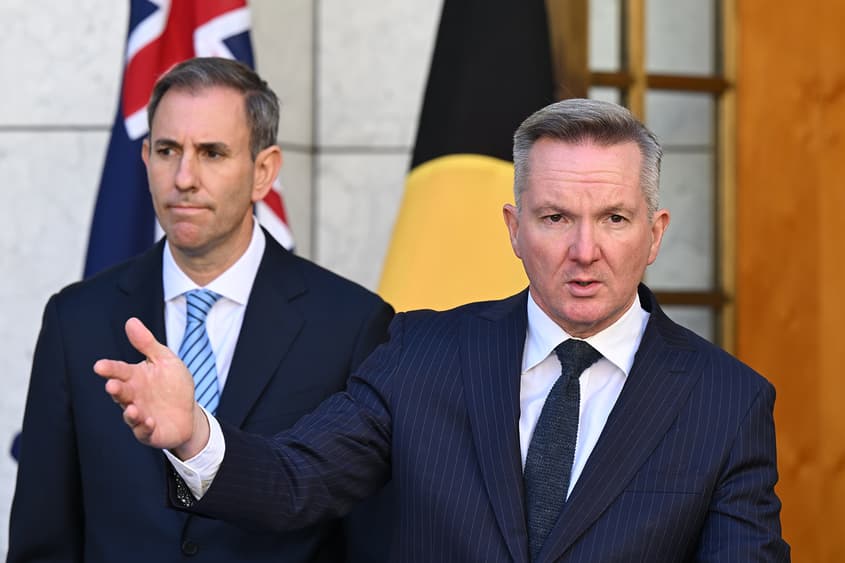
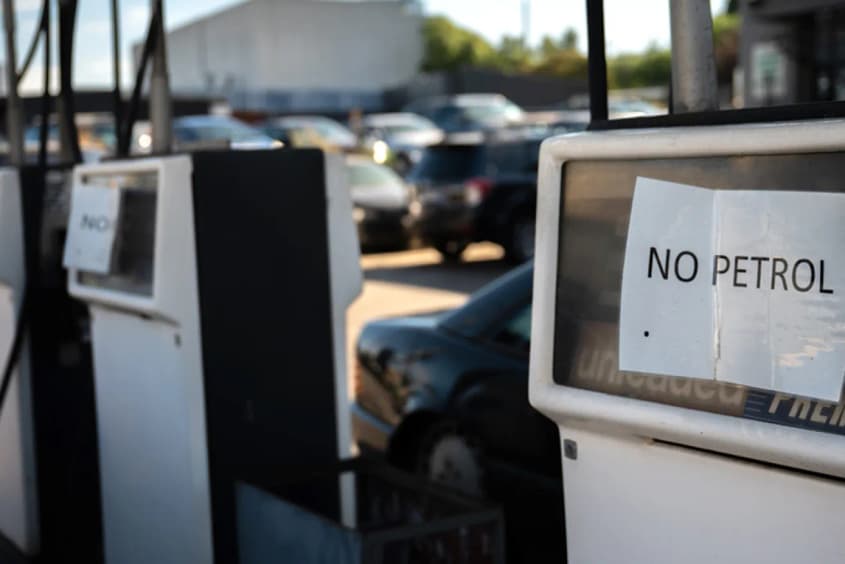
Energy security is national security. And for all the posturing from conservatives about “seeing Mad Max levels around the country right now” (whatever that means, the LNP’s Phil Thompson), they did this.
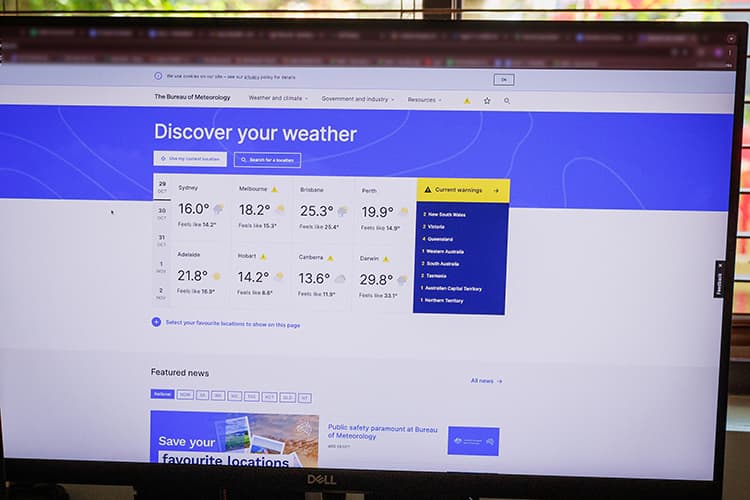
The consulting firm behind the Bureau of Meteorology’s (BoM) heavily criticised website has been awarded another multi-million-dollar government contract to build a new climate platform.
Advertisement
So much of what passes for Australian political discourse relies on existential threats. It’s easy to make grandiose statements and take positions when the threat is some amorphous vague maybe that could possibly happen.
The easiest way to understand the structural shift taking place in Australian politics is to understand that you can now win a landslide majority of seats in parliament even when your primary vote declines.