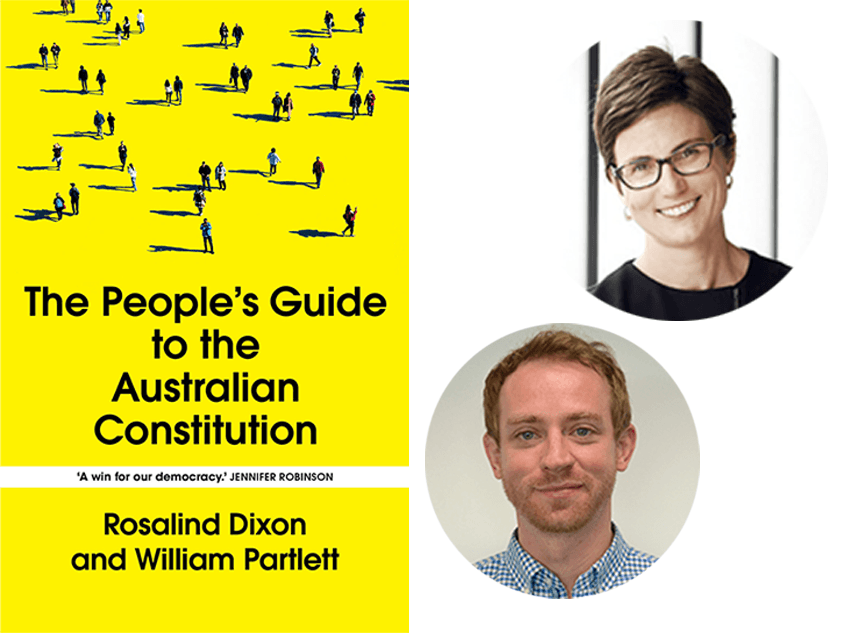
An extract from The People's Guide to the Australian Constitution by Rosalind Dixon and William Partlett, published by UNSW Books


Thu 2 Apr 2026 01.00


In 1891, the push to adopt an Australian constitution seemed unlikely to succeed. The first attempt produced an unremarkable, lawyerly document, which established an appointed upper house and a system that did not require government ministers to be accountable to popular representatives for their actions and decisions. This draft failed to generate much enthusiasm and was not taken forward. It appeared that the attempt to federate Australia had failed.
A few years later, however, in a remarkable series of events for a British colony thousands of kilometres from Europe, a series of peoples’ gatherings restarted the process. These gatherings devised a new process: the parliaments of each of the colonies would write legislation allowing their people to directly elect representatives to a new constitution-making convention. This new group of elected representatives came together with the explicit purpose of enlarging the Australian people’s powers of self-government. They produced a highly original text that featured an elected upper house and a referendum process for amendment. Although imperfect – notably, it excluded both women and Aboriginal and Torres Strait Islander peoples – it was, for its time, a radically democratic document.
This text – our Constitution today – combines different forms of democracy. In fact, democracy can mean different things: direct democracy, where everyone has a direct say in making the rules and running the government, or representative democracy, where we elect people to do these tasks on our behalf. Representative democracy has been a foundational value in the Australian Constitution since 1901. The Constitution established a representative institution called parliament – the branch of government that makes laws, debates public policy and holds the executive accountable – as the central institution in our democracy. Moreover, it required that the members of both houses of parliament be elected by the people. This was highly innovative: Australia was the first parliamentary system to have a directly elected upper house. Direct democracy also played a role, as the framers broke with British representative tradition and gave the people the decisive power to amend the Constitution through a referendum.
Democracy can also be understood in narrow and broad senses. The narrow sense involves norms and institutions focused on electoral accountability, or the accountability of elected representatives to the people. This ‘democratic minimum core’ includes the idea of regular, multi-party, free and fair elections, but also political rights and freedoms that give citizens the right to vote, to hold governments to account through protest, to have a free press and to enjoy free speech. And it requires institutions – such as courts – to uphold these commitments. But it is still relatively narrow. Other definitions of democracy are broader, and include things like active public debate among citizens (for example, through citizen assemblies) and the protection of civil rights, such as the right to privacy, freedom of association or belief and political participation, and even socioeconomic rights such as the right of access to food, housing, healthcare and social security.
Australia combines elements of both narrow and broad understandings of democracy. The Constitution provides strong legal protections for the minimum core of democracy, including the textual guarantee that both the upper and lower houses of parliament are ‘directly chosen by the people’. The strength of Australia’s electoral democracy is reinforced by longstanding legislative provisions, including for a system of compulsory voting.
The broader notions of democratic inclusion, trust and participation are in the written Constitution as well, such as a provision empowering the parliament to intervene in private industrial relations between employees and employers. Other mechanisms ensuring these purposes have been left to ordinary legislation, including the creation of powerful guardian institutions such as the Australian Electoral Commission and the National Anti-Corruption Commission, which oversee trust in the voting process and in public administration, respectively. This unique combination of democratic elements was described by James Bryce in 1901 as ‘the high-water mark of popular government’ and ‘penetrated by the spirit of democracy’. US President Teddy Roosevelt declared Australia to be a ‘splendid object lesson’ in representative democracy. Since then, Australian democracy has also developed a number of innovative mechanisms, from compulsory voting to the set of highly respected electoral institutions we note above.
This is an edited extract of The People’s Guide to the Australian Constitution by Rosalind Dixon and William Partlett, published by UNSW Press ($19.99) and available now.
Rosalind Dixon is a Professor of Law at UNSW Sydney, and former assistant professor at the University of Chicago, and visiting professor at Harvard Law, Columbia Law, and Chicago Law Schools.
William Partlett is Associate Professor at the University of Melbourne Law School and Co-Director of its Centre for Comparative Constitutional Studies.
Advertisement
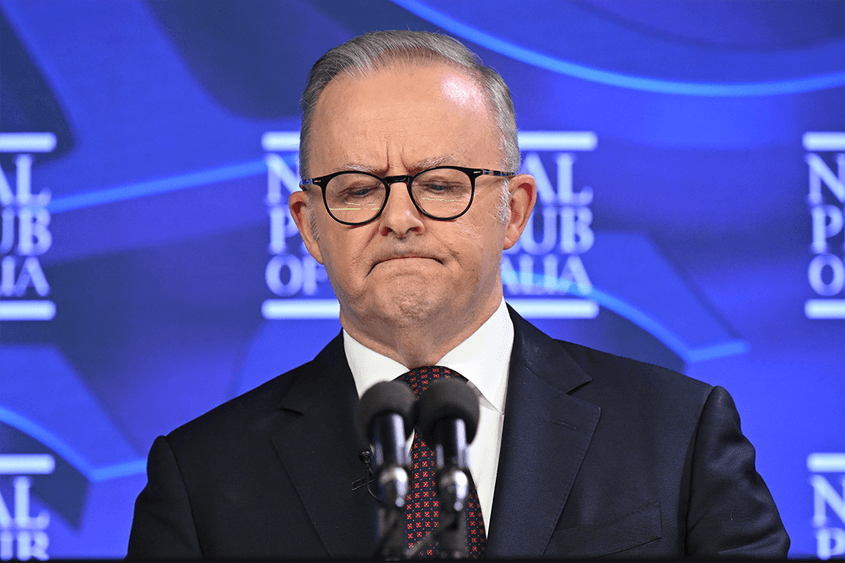
Last night, the Australian Prime Minister had the chance to face reality. His address to the nation was a recognition that Australians are deeply worried about the state of the world – as they should be. What the prime minister did not say is that this trouble lies at the feet of the President of the United States.
Energy security is national security. And for all the posturing from conservatives about “seeing Mad Max levels around the country right now” (whatever that means, the LNP’s Phil Thompson), they did this.
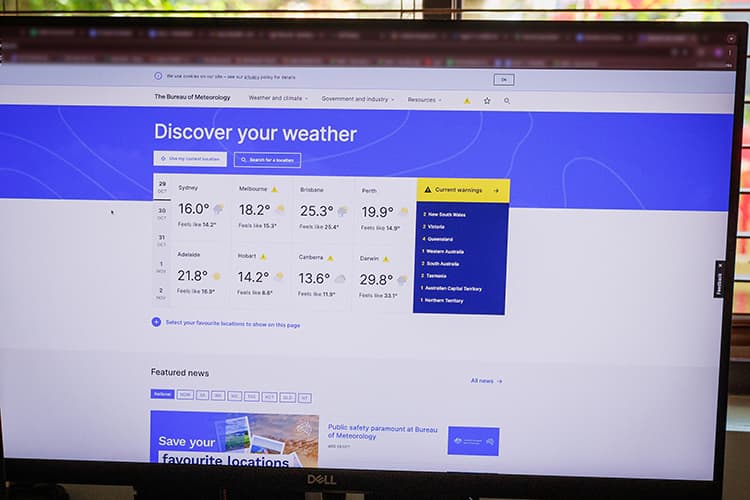
The consulting firm behind the Bureau of Meteorology’s (BoM) heavily criticised website has been awarded another multi-million-dollar government contract to build a new climate platform.