Australian politicians are defending and defining patriotism
Patriotism has long been seen, particularly among left-wingers, as nationalism with better PR: narrow and short-sighted at best; racist, tribal, and isolationist at worst. But in recent years, Australian politicians have articulated a positive patriotism: one that cares about the Australian people, recognises Australia’s strengths and good qualities, and allows the country to reach its full potential.

Thu 9 Apr 2026 01.00
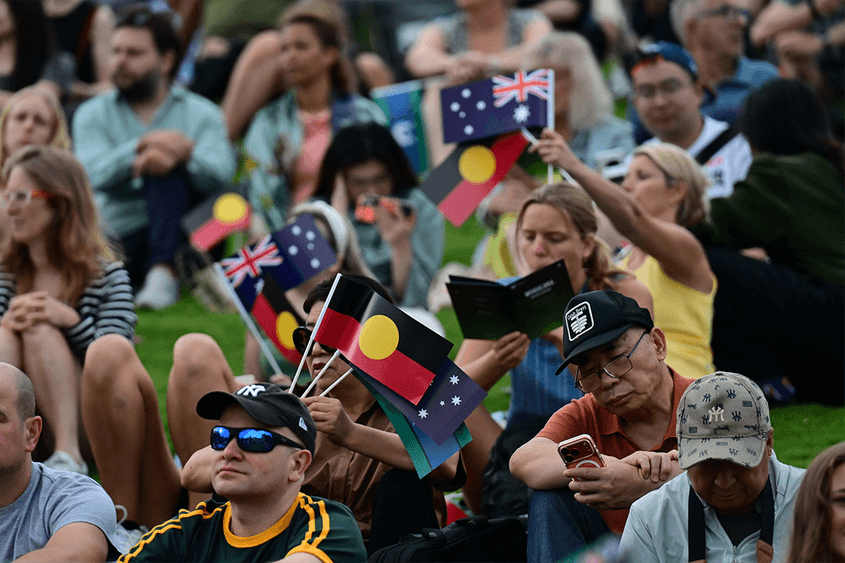
Photo: AAP Image/Dean Lewins


Patriotism has long been seen, particularly among left-wingers, as nationalism with better PR: narrow and short-sighted at best; racist, tribal, and isolationist at worst.
But in recent years, Australian politicians have articulated a positive patriotism: one that cares about the Australian people, recognises Australia’s strengths and good qualities, and allows the country to reach its full potential.
The Australia Institute’s own Greg Jericho was an early adopter, saying in 2020 that “I love Australia”, and exposing the false patriots who do not care that climate change will devastate our unique and beautiful continent.
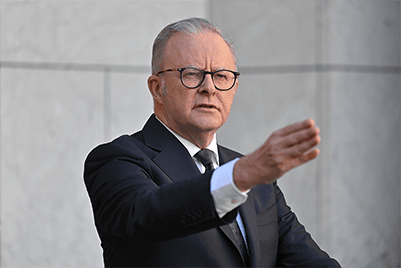
As he approached the end of his first term, Prime Minister Anthony Albanese was figuring out how to “knit together patriotism with left-wing values” – that his was an “Australian way” of doing things, while rival Peter Dutton was copying Donald Trump’s worst ideas and rhetoric.
Mr Albanese debuted the “progressive patriotism” slogan after the 2025 election, linking it to “Labor reforms in housing, Medicare and childcare to help grow the economy” and adding:
“Here in Australia, we can be a microcosm for the world. That says that we’re enriched by our diversity, that we have respect for people of different faith, that we try to bring people together, that we don’t bring turmoil overseas and play out that conflict here, either, and that’s really important”.
This month, independent Allegra Spender told the ANU National Security College that “inclusive patriotism” (coined by political scientist Yascha Mounk) could hold diverse democracies like Australia together:
“Cultivated well, [patriotism] is a powerful force. It is what allows an Anglo-Celtic Australian in regional Queensland to feel genuine concern for a Lebanese-Australian family in Western Sydney. It is what I saw the week after Bondi, when Australians of all faiths and backgrounds travelled hours to lay flowers and stones, and say to Jewish Australians: that is not our country, we stand with you. It is what makes ‘us’ larger than our own tribe.”
Australian politicians and commentators do not always talk up Australia. After President Trump imposed arbitrary tariffs on Australia, right-wing think tank the Institute of Public Affairs declared, “Frankly, we got off lightly and should be grateful the Trump administration didn’t hit us harder.”
And after the United States waded into a counterproductive war with Iran, One Nation leader Pauline Hanson said Australia should have joined the conflict.
By contrast, Senator Jacqui Lambie’s “Australia comes first” rhetoric is specifically defined in contrast to President Trump’s contemptuous attitude toward Australia and the United States’ lack of appreciation for Australia’s past military contributions.
She calls for a more independent defence policy, including investment in missiles and drones – but speaks respectfully about the international rules-based order, which was “designed to stop major conflicts” until President Trump “ripped it up”.
To head off One Nation, Labor is also talking about patriotism – although “progressive” has become an optional addition. Proudly centrist South Australian Premier, Peter Malinauskas, says:
“One Nation project patriotism in their form: we shouldn’t sneer at it. It opens up an opportunity for others to talk about patriotism in a way that I think reflects our country.”
What kind of patriotism? Deputy Prime Minister Richard Marles “talked up” AUKUS, the nuclear submarine program that ties us closer to an erratic United States.
Defence Industry Minister Pat Conroy says the “heart of the progressive patriotism agenda the prime minister took to the people” was:
“Aussie-made steel leading to Aussie-made missiles.”
While local defence manufacturing could allow for a more independent defence policy, it is historical revisionism to say it was at the “heart” of the progressive patriotism agenda. From Mr Albanese’s own mouth, “housing, Medicare, and childcare” were central.
With more politicians, commentators and experts thinking about what patriotism means in the 21st Century, I hope Australia can find a form that cares about the rest of the world, while putting the interests of Australians ahead of those of multinational corporations, the American alliance and how the Washington Consensus says an economy should be organised.
Bill Browne is the director of the Australia Institute’s democracy & accountability program
Advertisement
Related Articles
Popular policies would be a better revenue raiser than taking fossil fuel and gambling donations
Australians are naturally suspicious of corporate donations, especially when they come from vested interests with everything to gain from influencing government decision-making. But are these donations large enough to explain why politicians act the way they do? The reality is that political donations from harmful industries are small relative to the payments parties receive from you, the voter.