Australia’s privatised schooling system makes our high schools the most expensive in the developed world. These high costs have far-reaching consequences for inequality in our society, including in who ends up in Australia’s Olympic squads.
A wide range of studies show that private schools don’t actually offer a better education than public schools; their advantages on standardised tests come almost entirely from the wealthier backgrounds of their students.
But the high cost of private schools does lead to segregating of Australian students along class and income lines. Rich kids attend expensive schools with fancy facilities, poor kids attend public schools which are often rundown by underfunding. The two groups rarely mix; a child from a rich family may even meet another student whose family earns less than six figures. This divide is on full display with Australia’s 2026 Winter Olympic squad.
While not creating better academic results, the mountains of cash, including government subsidies, flowing into elite private schools help pay for things like air-conditioned indoor equestrian arenas and private ski chateaus; these do give prospective equestrians and biathletes a leg up in their sports.
That’s why over three-quarters of Australia’s 53-strong Winter Olympic squad attended private high schools, either in Australia or abroad, well above the national average.
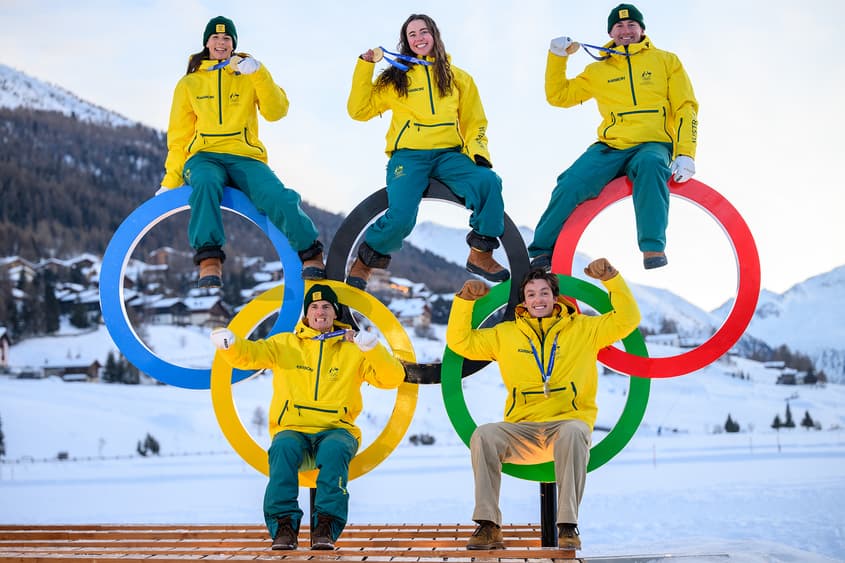
That includes moguls gold-medallist Cooper Woods-Topalovic, who attended Lumen Christi Catholic College on NSW’s South Coast.
Just one private school, Pymble Ladies College in Sydney, educated six of Australia’s Winter Olympians – almost as many as all of Australia’s public schools combined. That success didn’t come cheap; sending a child to Pymble costs parents up to $45,000 per year.
Yet, while Pymble pours money into sporting facilities and ski trips, it still receives over $10 million in government funding a year. At the same time, Australian governments severely underfund public schools, which face a collective funding shortfall of over $4 billion each year.
In that context, it’s hardly surprising that public school principals prioritise repairing classrooms over ski lessons.
Of course, educational institutions are far from the only factor driving Olympic inequality. Getting to the Olympics requires an immense level of investment of time and money for training, travel, gear, and other costs. That’s even more true for Winter Olympic sports, which tend to skew wealthier anyway – most Australian families can’t afford the multiple yearly trips to the snow necessary for professional-level skiing and snowboarding. The same families that can pay excessive private school fees can afford these sorts of expenses.
Australia’s heavily privatised school system isn’t improving academic outcomes, but the growing inequality it creates in Australian society is on full display at Milan Cortina.