Budgets are about choices, and as the Federal Budget approaches in May, it’s a good time to ask who the Australian Government has in mind when they make their choices.

Tue 17 Feb 2026 01.00
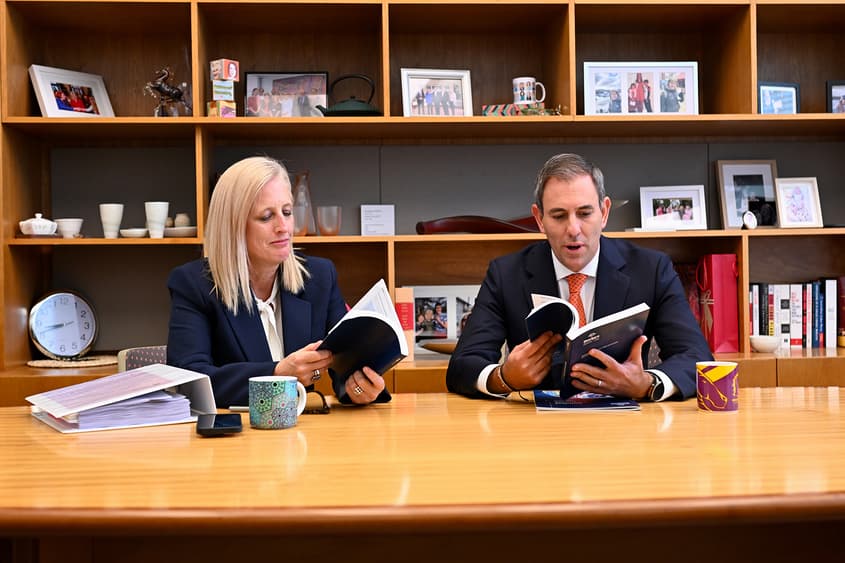
Australian Treasurer Jim Chalmers (right) and Australian Finance Minister Katy Gallagher take a look at the Budget papers during a picture opportunity at Parliament House in Canberra, Monday, March 24, 2025. (AAP Image/Lukas Coch) NO ARCHIVING


Budgets are about choices, and as the Federal Budget approaches in May, it’s a good time to ask who the Australian Government has in mind when they make their choices.
Commissioned by the Greens, the Parliamentary Budget Office released research this month showing that the capital gains tax discount would cost the Government almost $250 billion in forgone revenue over the next decade.
The PBO also points out that most beneficiaries of the CGT discount are in the top 10% of income earners, with the top 1% of income earners accruing almost 60% of the tax savings.
This is particularly egregious given that male recipients of the CGT discount receive an average benefit of $21,010. For context, this is around $400 more than a jobseeker is entitled to in income support payments in an entire year.
What the PBO report doesn’t say is that the CGT discount also primarily benefits men rather than women.
This isn’t isolated to CGT; men get a larger overall share of the benefits of Australia’s current tax expenditures and deductions. The Tax Expenditures and Insights Statement (TEIS), published each year by Treasury, now includes a distributional analysis of large tax expenditures and deductions by gender, and in news that will not shock many, men receive a greater share of the benefits of our tax settings than women.
The total estimated cost for the ten tax benefits included in the gender distributional analysis in 2025-26 is $133 billion. Of that, around only $5 billion (less than 4%) is earmarked for schemes – such as the seniors and pensioners tax offset – that primarily benefit women and other people on low and moderate-incomes.
Even though women are just as likely as men to receive tax concessions, discounts and offsets, they receive a smaller share of the financial benefit. For example, women make up 50% of the recipients of concessional taxation of superannuation contributions but receive only 39% of the share of total benefits. Men receive, on average, $2,490 in tax savings on superannuation contributions, while women receive $1,610.
In essence – men receive higher discounts on their tax bills than women do.
This is because men generally have higher incomes than women and are less likely to undertake unpaid and underpaid care work.
It’s also because our tax system is designed to benefit the wealthy.
Women may receive a higher share of the benefits of the Medicare levy low-income thresholds and the seniors and pensioners tax offset – but the TEIS estimates that these two items will cost the budget around $5 billion in 2025-26, compared with more than $50 billion for the capital gains tax discount and rental deductions.
Where tax concessions do benefit those on lower incomes, the average benefits are smaller. For example, women receive an average benefit of $330 from the Medicare levy low-income thresholds, compared with an average benefit of $320 for men.
In fact, the average benefit gap across the ten items listed in the TEIS gender distributional analysis is 24%. This means, that on average, for every $1 of benefit that men get from these ten tax concessions, discounts and offsets, women only get 76 cents.
The solution to this uneven distribution of tax setting benefits should not be to ensure that some women have higher incomes, but to redesign the tax system with equity in mind to support those in our community who have the least.
The Labor Government has shown that it knows how to implement tax settings that benefit women and those on low-incomes. Last week they introduced legislation to lift the Low-income Super Tax Offset threshold from $37,000 to $45,000 and to lift the contribution cap to $810 – the first time the threshold and limit have been updated since the scheme was introduced in 2012. Women are the majority of workers impacted by the LISTO, and the Super Members Council estimates that 760,000 women will benefit from the changes.
The Government’s commitment to gender equality is evident in other policies too – increased access to childcare subsidies and more funding for women’s health – but it will require bravery to properly tackle a tax concession system that benefits an elite few Australians.
Perhaps naming the problem is the first step toward addressing it, and the inclusion of the gender distributional analysis in the Tax Expenditures and Insights Statement is a signal that we can expect bigger, broader, and more equitable tax reforms in May.
Dr Gemma Killen is the Executive Director of the Working with Women Alliance. The Working with Women Alliance is funded by the Commonwealth Office for Women to provide evidence based, intersectional advice and civil society expertise on gender equality and women’s safety.
Advertisement
The Albanese Government is being urged to rule out changes to the Electric Car Discount in the May budget, as global fuel volatility intensifies pressure to ease the cost of living.
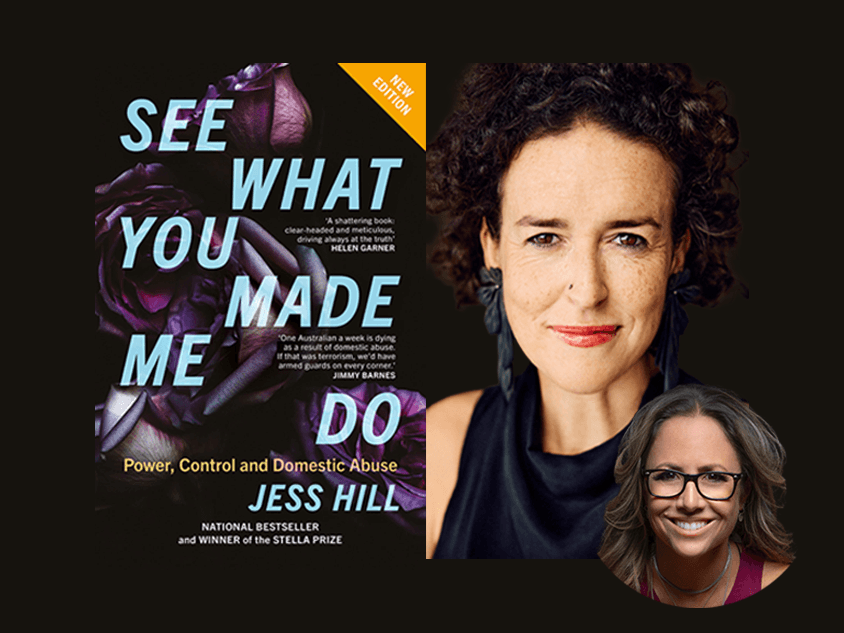
This is the new foreword, written by Clare Wright, for the new updated edition of 'See What You Made Do' by Jess Hill
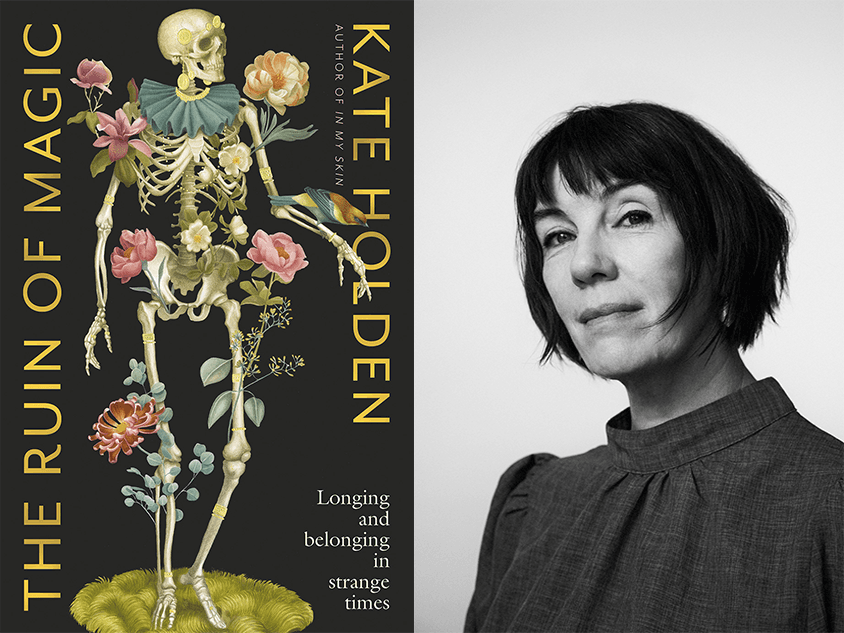
This is an edited extract from "The Ruin of Magic" by Kate Holden, published by Black Inc.
Last year the Australian National University (ANU) was getting some bad press, so they engaged a company called Bastion Reputation to help with the media fallout from restructures and the heavily criticised leadership of its Vice Chancellor, Professor Genevieve Bell. The meeting cost $6,000, which is more than ANU paid me for a full semester of tutoring in 2023. According to a response to an FOI request, the meeting did not warrant any notetaking and was “not significant”.