Part Three: Why CCS subsidies are a perpetual scam
Welcome to CCS week. Leaders in the carbon capture, transport, storage and utilisation industry are gathering at the “CO2CRC” conference in Melbourne.

Tue 24 Feb 2026 01.00
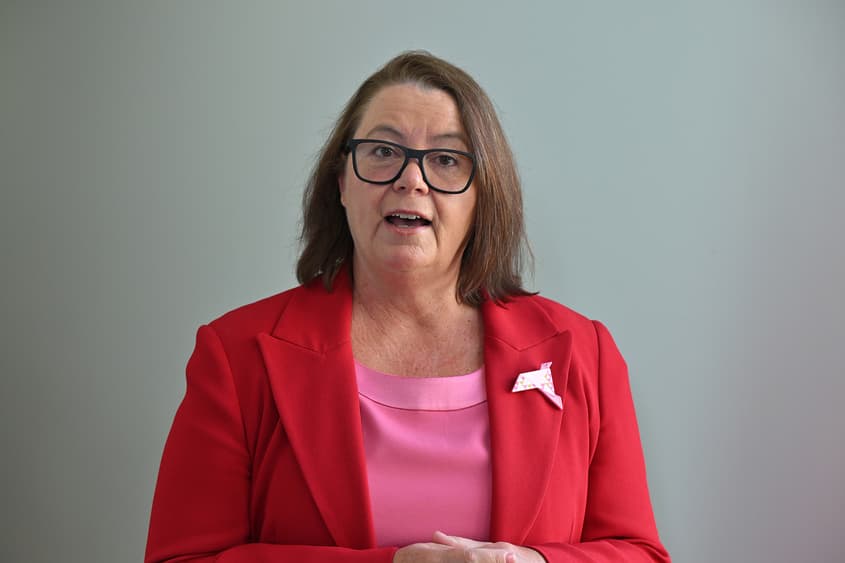
Photo: AAP Image/Mick Tsikas


This is part 3 of an ongoing series covering the marketing of CCS in Australia. Read Part 1 and Part 2 of the false promise of carbon capture and storage, and Louise Morris’ recent coverage: CCS isn’t climate action, it’s an offset scam.
Welcome to CCS week. Leaders in the carbon capture, transport, storage and utilisation industry are gathering at the “CO2CRC” conference in Melbourne.
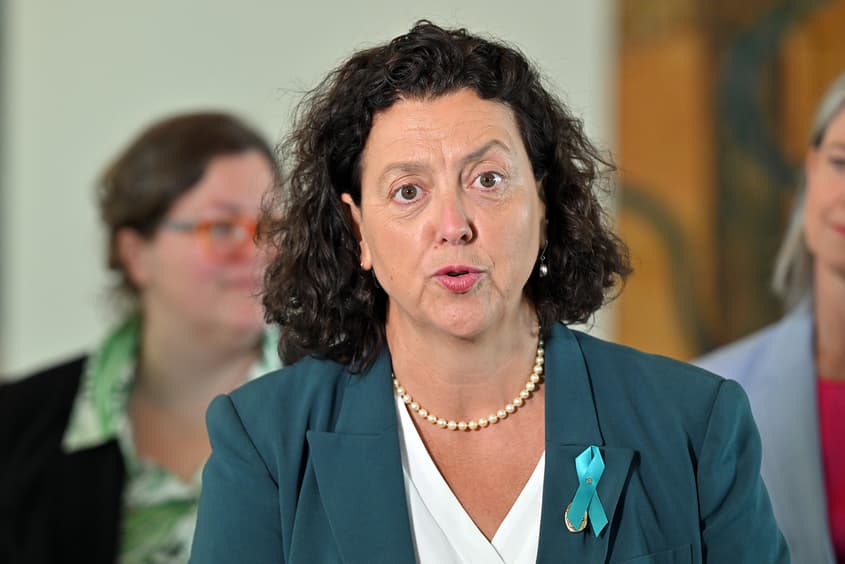
In attendance is the Federal Resources Minister Madeleine King. According to The Australian, King will tell the conference about “Caroline the borehole”, a site in South Australia that produces carbon dioxide for use in fizzy drinks and hospitals. “I want to be very clear, by talking about a CO-producing well, I am not seeking in any way to minimise the impact that carbon dioxide produced by human industry has had and is having on the global atmosphere”, she’ll tell the good people of CO2CRC, insisting that Caroline is just an example of the fact that carbon dioxide can be stored in big holes in the ground.
King will also tell the conference that “The world’s largest CCS project on Barrow Island off the coast of WA has stored 12 million tonnes of CO2”. As I wrote in a previous piece in this series, while that number is roughly correct, Gorgon “has also dumped 21 megatonnes of carbon dioxide directly into the atmosphere, because it could not be injected. Gorgon was meant to have injected nearly 29 megatonnes by now. It has only achieved one third of that.
The entire point of these conferences is to frame the stunning failures of CCS as if they’re wins and then rattle a can for government subsidies. But even when it “works”, CCS barely scratches the total pollution created by fossil fuels. The polluting companies at this conference will want to gloss over that.
Oh, you weren’t invited? Don’t worry, you can watch it live.
Yes, make your own canapes at home and enjoy the INPEX WELCOME DRINKS, or dress up in your finest threads and remotely enjoy the SANTOS GALA AWARDS DINNER.
CCS conferences are dominated by the fossil fuel industry rather than climate advocates and experts. This is no surprise because CCS is, and always has been, a plaything of the polluters rather than a climate solution.
But there is something new at this event, going by the program and talk descriptions. It’s hard to describe as anything other than ‘triumphantly fatalistic’.
Headlined as “The role of CCS in confronting energy realities”, it’s a reframing of carbon capture and storage not as a climate saviour but as a desperate last resort: the thing we’re now forced to turn to in the face of climate failure and collapsed ambition. Climate policy is over, fossil fuels are resurgent and all anyone cares about is ‘energy security’, as the program insinuates:
“Carbon capture and storage (CCS) technologies provide one of the few viable pathways to reduce emissions while preserving energy security and affordability…..yet a widening investment gap threatens to slow progress, with current CCS funding falling well short of what’s needed to keep net-zero ambitions on track”.
Moomba’s overstated success
What “progress”? As described above with the Gorgon project, and in my previous articles in this series, CCS has a shocking track record of failure no matter which way you look at it. But the more recent Moomba project, owned by Santos, is being presented in the program as a stunning success:
“Starting up in October 2024, the Moomba Carbon Capture and Storage project (Moomba CCS) in South Australia’s Cooper Basin has safely and successfully stored 1.3 million tonnes CO2 equivalent (CO2e) in the first year of injection”
Not only is that 400,000 tonnes short of its actual rated storage capacity of 1.7 million tonnes, Santos has been granted lucrative carbon offsets for at least 900,000 tonnes, which other polluters will buy and use to justify their own continued pollution. At the current going rate for Australian offsets, Santos will earn $33 million dollars, thanks to this project.
At best, that cancels out most of the climate value this CCS project may have had. At worst, this offset-driven ecosystem of ultra-polluting greenwashing further sustains and justifies significantly worse greenhouse gas emissions.
The amount captured is also a mere 4% of Santos’ total emissions. The company enabled 28.4 million tonnes of emissions in FY25 by selling fossil fuel products – 21 times the amount it captured using CCS. We don’t congratulate tobacco companies for reducing smoking rates in their factory, and we shouldn’t congratulate Santos for the expensive and energy-intensive process of recapturing a small fraction of their emissions.
Despite the triumphant tone of the fossil fuel industry, they still cannot put forward a case for this technology that does not involve very, very significant amounts of other people’s money. Their core message this week will effectively be: “we cannot operate cleanly or responsibly unless you pay us to do”. And as the case of Moomba shows, even when it ‘works’, it’s still a miniscule fraction of the harm being caused.
The reality of CCS – perpetual subsidies
The offsets are clearly not enough cash. Low Emissions Technology Australia (LETA), originally established in 2006 as “COAL21”, is a non-profit funded by a voluntary levy on coal exports that seems to soak in vast volumes of cash and output very little (so little that they asked for less money). LETA were also one of the sponsors behind a widely-criticised News Corp sponsored content splash advertising the use of fossil gas.
A few weeks back, in advance of the CO2CRC conference and the 2026 budget, LETA demonstrated its real purpose: ensuring public/taxpayers cash flows back to the fossil fuel industry:
“Mr McCallum said government support is most important at the early stages of project development, when first-mover risks are highest and utilisation is still building. “Targeted co-investment can bring forward final investment decisions and crowd in private capital, so we can move from studies to construction and operations””
LETA’s pre-budget submission lays down a collection of demands for a massive increase of taxpayer funds towards CCS in Australia. But in doing so, LETA also cite a paper written by EY Parthenon which shows that the cost of capturing carbon is far, far greater than any financial incentives that come from putting a price on carbon, or voluntary carbon offsets:
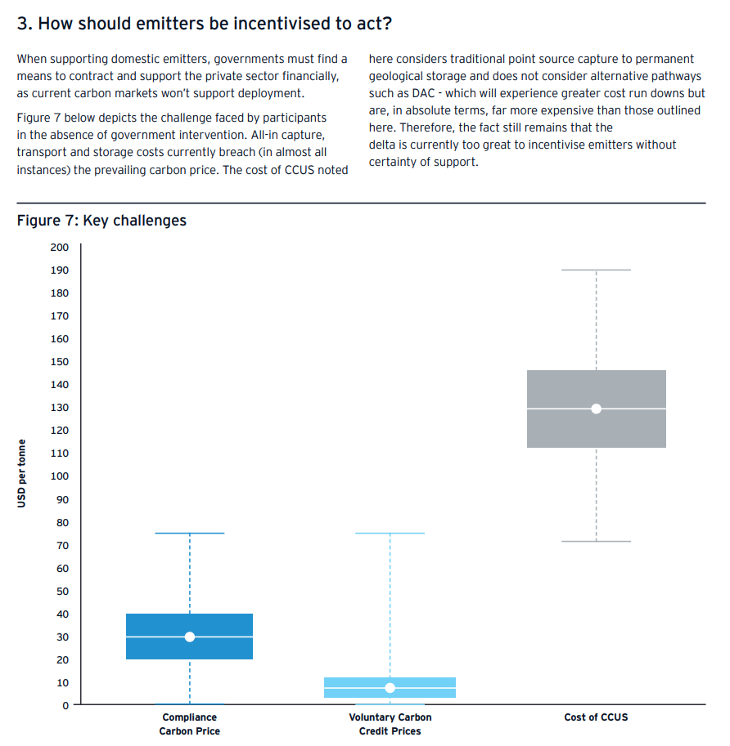
There is a clear reason why carbon capture is so expensive and requires so much of your tax money to ‘work’: it is difficult to extract dangerous pollution from mixed air once you’ve released it. If your local coffee ship sourced milk by unmixing it from completed flat whites, they’d be asking for subsidies, too.
The fossil fuel here isn’t just pushing a bad technology here: they’re trying to sell their doomed fight against entropy as if it’s better than just not using fossil fuels in the first place.
After decades, and billions in subsidies across the industry, projects like Moomba are still only slicing a thin layer of pollution off the top. Don’t listen to the triumphant tone that’ll come out of CCS week. The only winners for CCS subsidies are the companies that will continue to emit many, many more times carbo n than they capture.
Advertisement

Related Articles
Japanese climate coalition joins growing push for 25% gas export tax
Calls for Australia to impose a 25 per cent gas export tax have gained international backing, with a coalition of Japanese climate and advocacy groups urging the Albanese government to act.